
Digital advertising continues to outpace traditional methods, with global ad spend projected to exceed $1 trillion in 2025. Despite economic uncertainties, digital channels are expected to account for over 75% of this total, driven by the dominance of platforms like Google. As of mid-2025, Google’s search engine holds approximately 89.9% of the global market share, maintaining its position as the leading search platform. This widespread usage underscores the effectiveness of Google Ads as a powerful tool for small businesses aiming to reach targeted audiences efficiently.
The Four Google Ads Types
Businesses today have multiple options for online advertising, including Google Ads, Bing Ads, Facebook Ads, and more. Among these, Google Ads is the most widely used platform globally, offering powerful tools for small and medium businesses to reach their target audience effectively.
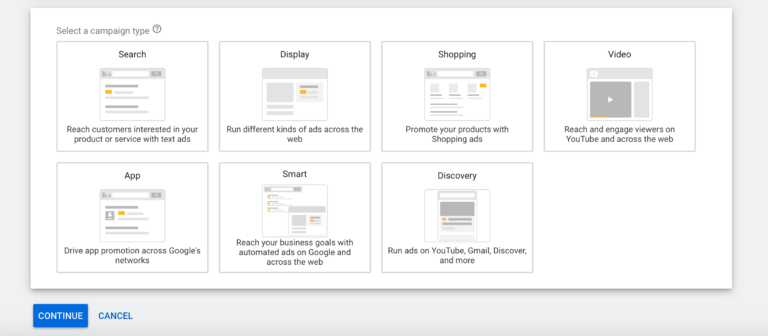
Google Ads, formerly known as Google AdWords (rebranded in 2018), is a pay-per-click advertising platform that allows businesses to bid on the opportunity to display ads to users across Google’s vast network. The platform drives the majority of Google’s advertising revenue, making it a critical channel for digital marketing. Today, advertisers can choose from several campaign types, including Search, Display, Shopping, Video (YouTube), App, Discovery, and Performance Max campaigns. The most commonly used types for small businesses are Search, Display, Shopping, and Video ads.
Google Search Ads
Search Ads appear above or below organic search results when users search for relevant keywords. These text-based ads drive traffic directly to your landing pages and are particularly effective for small businesses because they target customers actively searching for your products or services. Starting with Search Ads is often the easiest and most cost-effective approach for new advertisers.
Google Display Ads
Display Ads appear across websites in the Google Display Network based on user interests, browsing behavior, or previous site visits. Display Ads are ideal for brand awareness and retargeting visitors who have previously interacted with your business. While click-through rates tend to be lower than Search Ads, Display campaigns can extend your reach cost-effectively.
Google Shopping Ads
Shopping Ads are designed for e-commerce businesses, showing rich product information including images, prices, and descriptions. These ads help potential customers find your products quickly, often resulting in immediate sales or later engagement. Shopping campaigns pull product data directly from your Google Merchant Center, ensuring accurate and up-to-date listings.
YouTube Ads
YouTube is the world’s largest video platform, offering multiple ad formats that let businesses engage users through short or longer video content. Ads can run before videos, within content, or on YouTube search results. YouTube Ads provide a cost-effective way to boost brand awareness and connect with audiences creatively, without the high costs of traditional TV commercials.

Pro Tip for Small Businesses: Different ad types serve different goals. For most small businesses, starting with Search Ads to drive immediate traffic and conversions is recommended. Once familiar with the platform, you can expand to Display or YouTube campaigns to increase visibility and awareness. Always test different campaigns and track results to maximize ROI.
Why Should Small Businesses Use Google Ads?
For small businesses, Google Ads is a measurable and cost-effective way to reach potential customers online. With advanced targeting options, you can focus your budget on the people most likely to engage with your products or services.
Precise targeting: Google advertising for small business allows you to target users based on keywords, demographics, location, language, device, and time of day. By narrowing your audience, you reduce wasted spend and ensure your budget reaches the right customers.
TIP: As a small business, it is very important that you select the targeting carefully. If you start out too big, your daily budget can run out very fast!
Flexible budget: You control exactly how much you spend each day, with the ability to adjust budgets, pause campaigns, or modify bids at any time. This flexibility allows small businesses to start with modest budgets and scale campaigns as results are measured.
Instant traffic and sales: Once campaigns are live, your ads can appear in search results almost immediately. For a small business, this means faster visibility and the potential for immediate leads or sales.
TIP: Be careful about which keyword type you select, using broad keywords can trigger irrelevant searches that will end up costing you money.
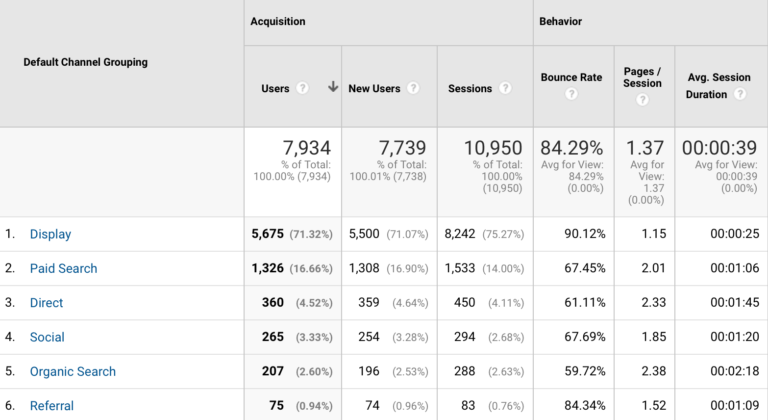
Data-Driven Insights: Google Ads provides detailed analytics, showing which ads, keywords, and targeting strategies drive sign-ups, purchases, or calls. With these insights, a small business can optimize campaigns, allocate budgets effectively, and measure performance against realistic expectations. For guidance, you can review Google Ads benchmarks to see typical performance metrics for your industry.
Scalable: As the world’s largest online advertising platform, Google Ads for small businesses allows campaigns to grow strategically. By analyzing performance, you can increase budgets for top-performing ads and expand reach without overspending.
Google Ads Statistics Panel
How Small Businesses Can Compete with a Small Budget in Google Ads
Even with a small budget, Google Ads for small businesses can deliver impressive results when used wisely. Here’s how small businesses can stretch their advertising dollars:
- Target High-Intent Keywords: Focus on long-tail, exact-match keywords like “emergency plumbing services [city]” or “handmade candles [city]”. These are more cost-effective and attract users who are ready to convert.
- Use Geographic Targeting: Limit your ads to your local area. For example, a local bakery can run ads within a 5-mile radius, ensuring they reach customers nearby who are most likely to visit.
- Set Ad Scheduling: Run ads during peak business hours. A restaurant might target lunch and dinner times, while a home service business could focus on evenings or weekends when people need urgent help.
- Control Your Budget: Start with a low daily budget, such as $5–$10, and adjust based on performance. Google Ads allows you to control your spending by setting maximum cost-per-click bids, so you’re always within budget.
By leveraging these strategies, small businesses can effectively compete in Google Ads even on a modest budget.
Account Structure of Google Ads
Before building out the company’s Google Ads account, businesses and advertisers should have a basic understanding of account organization, especially the search ads. The way you structure your Google Ads account can drastically affect the performance of your campaign.
Google Ads Campaign Structure
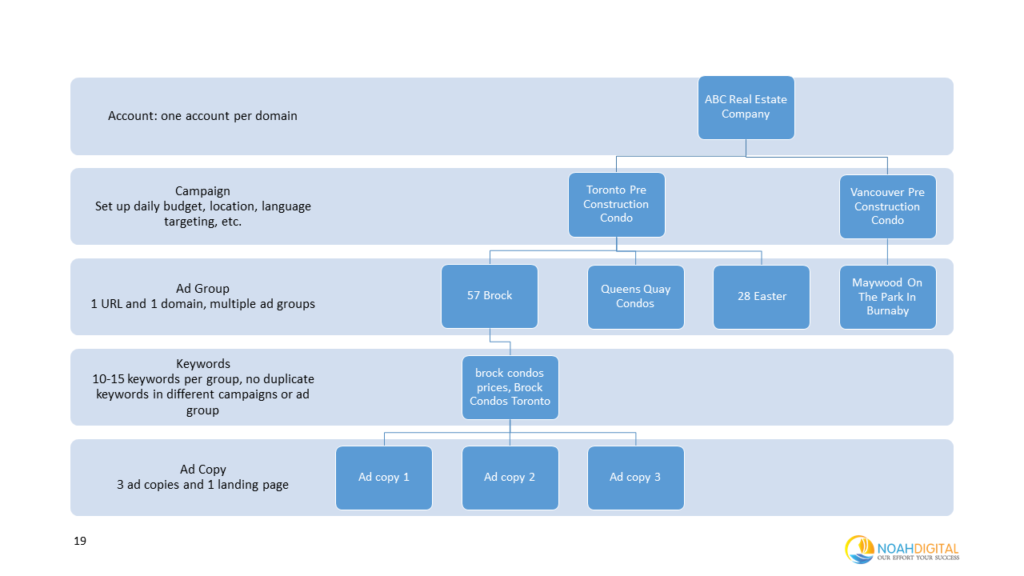
Google Ads is organized into three layers: ad account, ad campaigns and ad groups. The ad groups contain a set of similar keywords and ad copies.
Google Ad Account: a manager account can have 20 Google Ad accounts and as many as 10,000 campaigns for each. A typical account is usually more than enough for small businesses. Larger businesses may use multiple ad accounts, depending on the different types of businesses and domains they may have.
Google Ads Campaign: A Google Ads campaign can be created as a search campaign, display campaign, shopping campaign, video campaign and so on. Noah Digital strongly recommends that you set up and manage campaigns based on the category of your business or product (for example, each product or service can be a campaign). Therefore you can clearly see the result and performance of each campaign, which makes it easier to optimize and scale. In addition, in the ads account budgets are allocated to different campaigns. Generally, the budget is first given to search advertising campaigns that are most likely to bring in traffic and sales. Display ads may use up to 20% of the budget, the allocation is affected by the goal of the business though.
Ad Group: in each ad campaign, there are different types of ad groups with similar keywords. Ad groups use a similar structure as campaigns, including up to twenty keywords related to the product/business. The main function of the ad group is to refine the product or service, so as to monitor the performance of each specific keyword.
Keywords: keyword selection is the core of Google search ads, and keyword matching can be divided into four types – broad match, modified board match, phrase match and exact match. Keywords are typically related to the brand, product and service. When setting up keywords, you should not use the same keywords that appear in other campaigns and ad groups, this is not good for performance, optimizing and cost. Phrase match and exact match allow you to reach prospects searching only for the specific or close keyword, with a relatively high click-through rate and conversion rate. The match type keywords “broad match” and “modified broad match” can be very broad, with a relatively low click-through rate and conversion rate.
Ad Copy: each ad group needs three sets of ad copy and one landing page. Headlines and descriptions are the most important, catching the user’s attention. The headline contains up to 30 characters and the description contains up to 90 characters. In the advertising headline and description, we use high-level copywriting skills to clearly describe unique selling points and offers, so as to make the ads stand out among competitors.
Myths About Google Ads
Small business owners often have questions like, “Will competitors click on my ads?” or “Is Google Ads worth the investment?” Let’s debunk eight common myths about Google Ads.
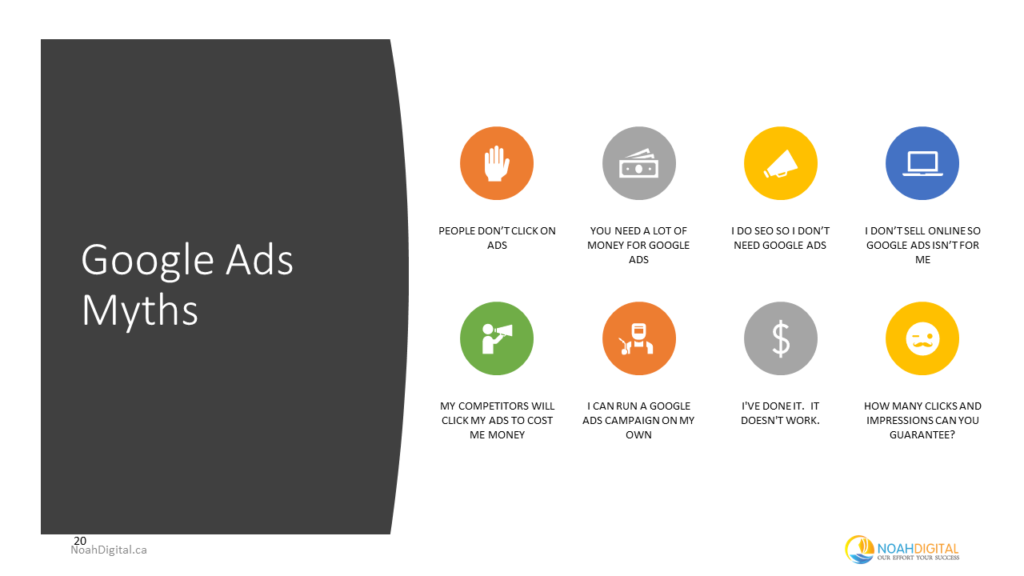
Myth 1 – “People don’t click on ads!”
Many users do click ads, especially the top results on Google Search. Studies show that a significant portion of users cannot easily distinguish between ads and organic results. In fact, approximately 75% of users feel Google search ads help them find relevant information.
Myth 2 – “Google Ads is expensive!”
While some highly competitive industries like law or finance can have a cost-per-click (CPC) of $50–$100+, most industries see CPCs around $1–$3. When campaigns are managed properly, PPC advertising for SMEs can be more cost-effective than traditional advertising. Google Ads allows precise targeting and budget control, helping small businesses reduce wasted spend and achieve a lower customer acquisition cost (CAC).
Myth 3 – “I do SEO, so I don’t need Google Ads!”
Even if your website ranks high in organic results, studies show that about 41% of clicks go to the top three paid ads. SEO only covers a limited number of keywords, leaving many opportunities untapped. Paid search helps capture traffic that might otherwise go to competitors. Learn more about the differences between PPC and SEO to understand why combining both strategies works best.
Myth 4 – “If you don’t sell products online, you don’t need to advertise!”
Google Ads is effective for both e-commerce and lead-generating businesses. Industries ranging from real estate, finance, education, tourism, to B2B services can attract potential customers online. Integrating ads into a broader digital marketing for local businesses strategy helps small businesses compete and generate leads, even without an online store.
Myth 5 – “Do competitors click on my ads?”
Google’s click-fraud detection automatically identifies invalid clicks and issues refunds when necessary. Small businesses can run campaigns with confidence, knowing that false clicks are minimized.
Myth 6 – “Can I run Google Ads independently?”
While the platform may seem simple, effective management requires experience and knowledge. Poor setup or optimization can result in wasted budget. Following core Google Ads principles helps ensure campaigns are structured efficiently, reducing errors and improving performance.
Myth 7 – “Google Ads doesn’t work.”
Campaign failure is usually due to poor management, incorrect keywords, or lack of optimization. The best way to maximize results is to hire Google PPC experts who can plan, launch, and manage campaigns effectively, ensuring your budget drives traffic and conversions.
Myth 8 – “How many clicks and views can you guarantee?”
The effectiveness of your ads depends on targeting, conversion tracking, and campaign setup. Small businesses should monitor key metrics like traffic, conversion rate, and customer acquisition cost (CAC) to measure real results. Google Ads provides the data needed to optimize campaigns, focus on high-performing keywords, and scale effectively.
Google Ads Case Studies
You may have experienced this: your website is live, but there’s little to no traffic – like an isolated island in the desert. Even with SEO in place, it can take months to generate significant organic traffic.
At this point, Google Ads can help. When campaigns are set up correctly, it can deliver targeted traffic, leads, and sales quickly.
Over the past 18 years, Noah Digital marketing experts have helped clients across multiple industries leverage Google Ads to grow their business. For example, we’ve assisted companies in implementing B2B Google Ads strategies to reach key decision-makers and generate high-quality leads efficiently. Results vary depending on industry and campaign setup, but many clients have seen measurable growth in leads and sales within a few months.
Learn more about our success stories in Noah Digital’s online marketing case studies.
In Conclusion
In digital advertising, small and medium-sized businesses can greatly benefit from Google Ads. The platform offers precise targeting, fast results, and the ability to scale campaigns efficiently, making it a powerful solution for both new and established businesses. Success with Google advertising for small business requires expertise in campaign creation, daily management, optimization, and data analysis. Google Ads is a professional platform, and working with certified experts ensures your campaigns deliver measurable results. With over 18 years of experience managing more than $50 million in advertising campaigns, the Noah Digital team has helped companies of all sizes implement effective Google Ads small business campaigns, achieve meaningful leads, and expand their reach.
Learn from our success stories and contact us for a free consultation to discover how Google Ads for small businesses can drive targeted traffic, generate leads, and grow your business online.