

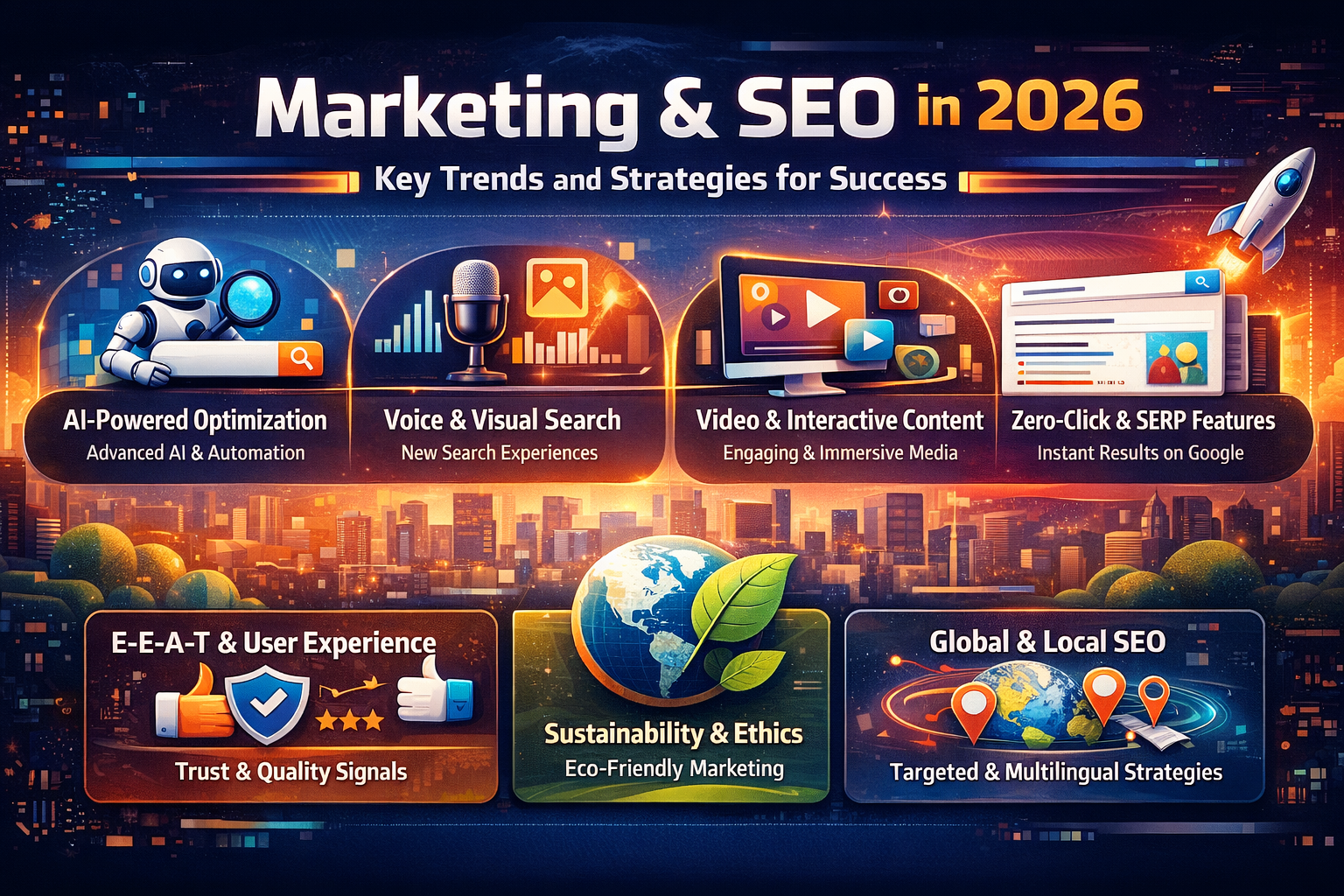
2026 is here, and the digital marketing landscape is shifting fast. With AI transforming SEO and user behaviour evolving, businesses must stay agile to stay ahead. But how do you ensure you’re not left behind? Let’s dive into the key trends for 2026, like AI-powered search, the growing importance of user experience, and how to optimize for both AI and traditional search engines.
1. The Rise of AI-Powered SEO
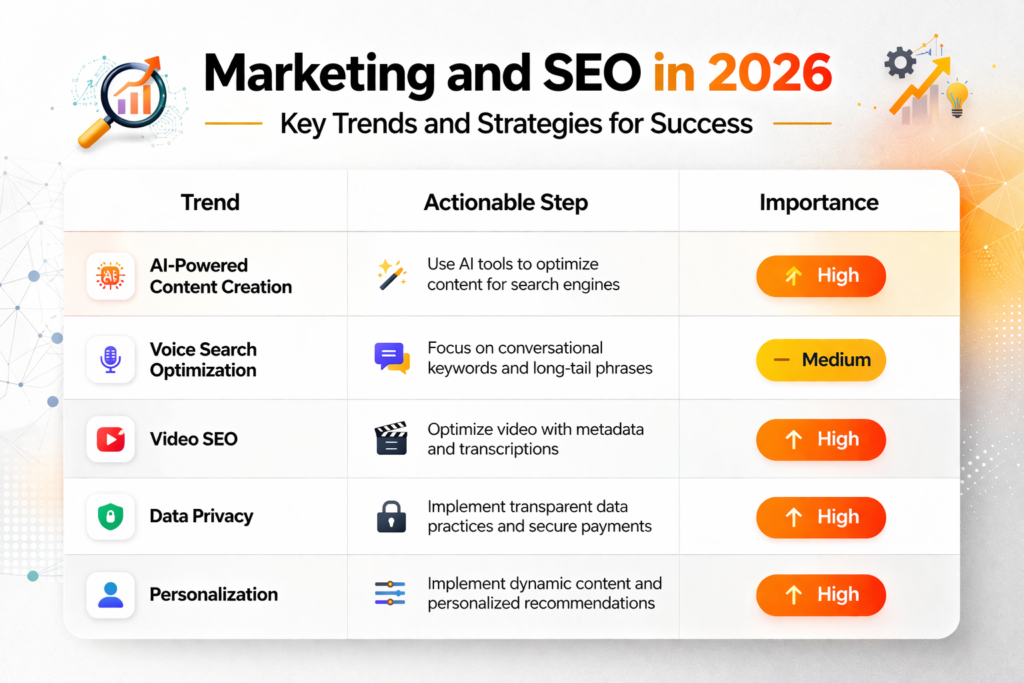
Artificial Intelligence (AI) is no longer just a buzzword; it’s reshaping the way SEO works. In 2026, AI will play an even more central role in search algorithms, content creation, and user engagement. AI-driven tools, such as AI content optimization and predictive analytics, will allow marketers to create more personalized and relevant content, improving user satisfaction and engagement.
How AI Impacts SEO in 2026
- AI for Content Creation: AI tools like GPT-4 will be able to generate SEO-optimized content in real-time. Marketers will use these tools to create high-quality, keyword-rich articles, blog posts, and landing pages that rank better on search engines.
- AI-Powered Search Engines: With the rise of AI-powered search engines, optimizing for both Google AI search and traditional algorithms will be crucial. These AI tools will focus on delivering context-aware results, meaning marketers will need to create content that answers not only keywords but also related sub-queries and user intent.
- AI for Link Building: AI tools will assist marketers in identifying high-authority websites for backlinks, analyzing competitors’ link profiles, and automating outreach efforts, streamlining the link-building process.
2. Search Engines and AI Search: A Shift Toward User Intent
AI search engines are evolving and becoming more context-aware. Unlike traditional keyword-based algorithms, AI search engines analyze the intent behind the query, looking for nuanced and relevant answers. In 2026, this means that marketers will need to focus on providing detailed, high-quality content that fully answers users’ questions.
Adapting to AI Search Engines
- Answering User Queries: To thrive in the age of AI search, content must address not only the specific query but also related sub-questions. Marketers will need to adopt structured content that anticipates a user’s next question and provides a comprehensive answer in a seamless manner.
- Optimizing for AI Platforms: Marketers will need to focus on semantic search and use structured data (schema markup) to help search engines understand and categorize content more effectively. The use of long-tail keywords and topic clusters will increase in importance.
3. Voice Search and Conversational AI
With the growing popularity of voice assistants like Alexa, Siri, and Google Assistant, voice search is expected to see explosive growth in 2026. More than 50% of all searches are predicted to be voice-activated by 2026. Voice search relies heavily on conversational keywords and natural language processing (NLP).
Adapting for Voice Search
- Focus on Natural Language: As voice searches become more conversational, businesses will need to tailor their content to longer, more natural phrases. For instance, instead of targeting “AI SEO tools,” businesses might optimize for a question like “What are the best AI SEO tools for 2026?”
- Optimize for Featured Snippets: Voice search often pulls from featured snippets. By creating concise and valuable content, businesses can increase their chances of appearing in these voice-activated answers.
4. Personalization and Hyper-Personalized Marketing
In 2026, personalized marketing will go beyond using a customer’s name in an email. AI will enable deeper personalization, where marketers tailor content, products, and experiences to individual user preferences and behaviours. Personalized content not only boosts user engagement but also increases conversion rates.
Key Personalization Trends
- Dynamic Content: Websites and landing pages will use dynamic content to adjust based on user behaviour, preferences, and past interactions. For example, an AI-powered tool might display personalized offers based on a user’s browsing history.
- AI-Driven Product Recommendations: E-commerce sites will use AI to provide real-time product recommendations that are highly tailored to the user’s behaviour, increasing the likelihood of conversions.
5. Video Content and Interactive Experiences
Video content will continue to dominate in 2026, as it remains one of the most engaging formats for consumers. AI will enhance video marketing by automating video creation, transcriptions, and personalized video recommendations based on user behaviour.
Integrating Video for SEO
- SEO for Video: Video SEO will become an even more important part of the digital strategy. Businesses will need to optimize video titles, descriptions, tags, and transcriptions to ensure they appear in search results.
- Interactive Experiences: Interactive content like live streams, polls, quizzes, and interactive videos will increase user engagement. These elements not only keep users entertained but also provide valuable data to marketers about user preferences.
Insights from Reddit
The Reddit thread discusses how SEO in 2026 is shifting from keyword-focused tactics to prioritizing user intent, content authority, and real engagement. Key strategies include building content clusters, improving UX, and earning brand trust.
6. Privacy Concerns and Data Protection
As digital privacy laws become more stringent, marketers will need to prioritize data protection and ensure compliance with regulations such as GDPR and CCPA. AI-powered tools will play a key role in monitoring and ensuring data privacy, but businesses will need to stay ahead of potential challenges.
Strategies for Privacy-First Marketing
- Transparent Data Use: Marketers will need to clearly inform users about how their data is being used and provide easy ways for users to opt-out.
- Secure Payment Methods: As payment fraud becomes more prevalent, businesses will need to secure transactions with AI-driven fraud detection systems and offer payment options that ensure security for users.
Conclusion
The future of marketing and SEO in 2026 is marked by the increasing use of AI to enhance user experiences, optimize content, and drive engagement. Businesses that stay ahead of the trends, such as AI-powered SEO, voice search optimization, and personalized marketing, will gain a competitive edge. As AI continues to evolve, marketers will need to adapt quickly, leveraging AI tools to create more relevant, valuable, and personalized content for their audiences.