


Looking to boost your online presence and attract more customers? If you haven’t explored how AI can support your digital marketing, now’s the perfect time. In this article, we’ll cover 5 ways to use ChatGPT for SEO—from creating engaging content to improving your search engine visibility.
Whether you run a small business or manage a growing brand, these tips will show you how to leverage AI to stay ahead of the competition and connect with your audience more effectively. Ready to unlock smarter SEO strategies with ChatGPT? Let’s get started.
Table Of Contents
- ChatGPT Explained
- How ChatGPT Supports Smarter Marketing Strategies
- Enhance Your SEO Strategy with ChatGPT
- Conclusion
ChatGPT Explained
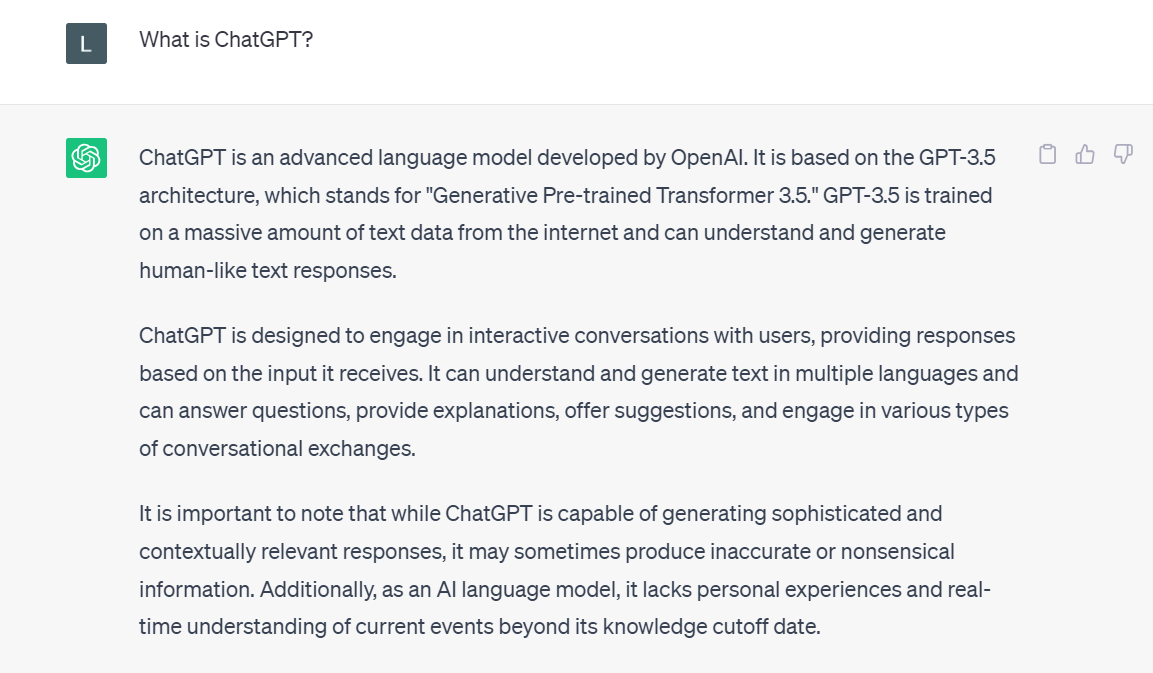
ChatGPT is more than just a chatbot—it’s a game-changer for digital marketing. Since its launch by OpenAI in November 2022, it has quickly become a go-to tool for businesses looking to streamline content creation and improve search visibility. From writing website copy to generating keyword-rich blog posts, using ChatGPT for SEO optimization can save time while boosting your rankings.
Available in both a free version and the more advanced ChatGPT Plus (released in February 2023), the tool offers flexible options depending on your needs.
Screenshot from ChatGPT, June 2023
How ChatGPT Supports Smarter Marketing Strategies
Think of ChatGPT as your efficient digital marketing assistant. While it doesn’t replace the creativity of an experienced marketer, it can greatly improve your workflow—especially when creating SEO-optimized content. From analyzing trends to understanding audience behavior, ChatGPT helps you make data-driven decisions without hours of manual research.
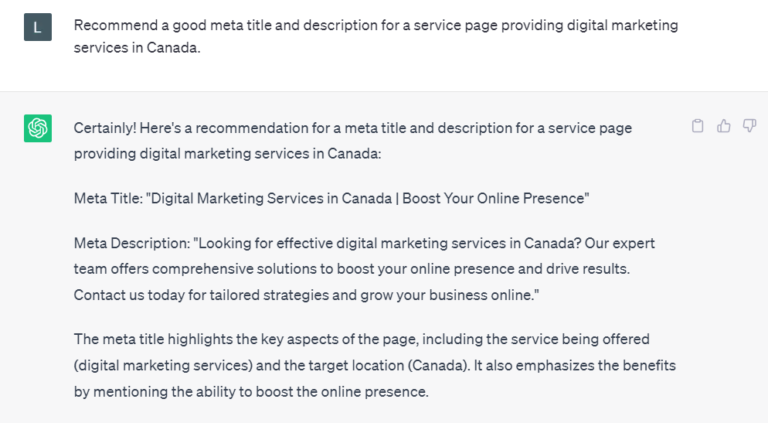
For organizations exploring digital marketing for nonprofits or small businesses running lean, ChatGPT is a valuable tool for boosting visibility. It can conduct in-depth keyword research, suggest relevant terms, and even draft engaging content and meta descriptions tailored to your target audience.
When conducting a digital marketing audit, ChatGPT can help identify content gaps, provide keyword suggestions, and support the development of a stronger, more focused strategy. Whether you’re optimizing blog content, crafting title tags, or scheduling social posts, ChatGPT simplifies time-consuming SEO tasks—allowing you to focus on high-level strategy and audience engagement.
How To Use ChatGPT for SEO?
Now that you have a clearer picture of how ChatGPT supports marketing, let’s explore how you can use it to become more efficient with your search engine optimization efforts. By learning how to do SEO with ChatGPT, you can streamline content creation and boost your search rankings. In the next section, we’ll walk through 5 ways to use ChatGPT for SEO, helping you unlock its full potential as a powerful tool in your digital strategy.
Master prompts
To get the best results with ChatGPT, it’s essential to know how to ask the right questions. The way you frame your prompts can make a big difference in the accuracy and usefulness of the responses. Clear, specific queries—especially for tasks like SEO keyword research—help you get more targeted insights that improve your content’s performance.
Instead of asking broad questions, try something more focused like: “Generate a list of long-tail SEO keywords related to organic gardening solutions.” Want more tips like this? Download our AI-powered guide to learn how to craft better prompts and unlock ChatGPT’s full potential for SEO.
Creating and optimizing content
When it comes to content creation, one of the most common questions business owners ask is: Can I really use ChatGPT to write SEO content? The short answer is — it depends.
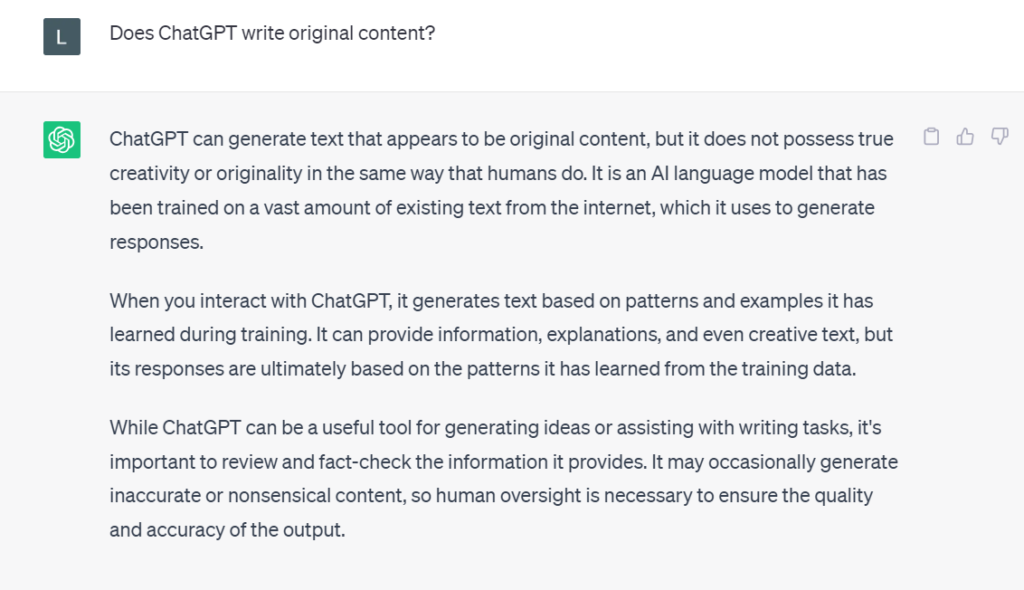
Creating high-quality content takes time, skill, and often a dedicated team. That’s where ChatGPT can help. One of the 5 ways to use ChatGPT for SEO is to create good content. With the right prompts, ChatGPT can quickly generate readable drafts that you can refine and personalize to fit your brand voice.
Screenshot from ChatGPT, June 2023
However, keep in mind that Google rewards content based on its E-E-A-T principles: Expertise, Experience, Authoritativeness, and Trustworthiness. While ChatGPT can generate a solid first draft, it doesn’t have access to real-time data, and its outputs are based on pre-2021 information. This means any content it creates should be reviewed and enhanced by a human to ensure it’s up to date, original, and valuable for your audience.
Also, originality is a must for strong SEO. Because ChatGPT pulls from existing data — including your competitors’ — it’s crucial to add your own unique insights and experiences to stand out and avoid thin or duplicated content.
That said, you can go a step further and use ChatGPT to optimize your content’s structure. For instance, after drafting a blog post, you can paste it into ChatGPT and ask for specific SEO enhancements such as improved headings, better keyword placement, or a rewritten meta description. A simple prompt like, “Suggest improvements for this article’s SEO structure,” can yield actionable recommendations that boost clarity, flow, and visibility.
Ultimately, ChatGPT won’t replace human creativity or expertise, but it’s a powerful tool that can streamline your workflow and help you find good content fast — making it an essential part of your SEO toolkit.
Keyword Research and Analysis
One of the most valuable ways to improve your online visibility is by conducting strong keyword research — and ChatGPT can be a helpful assistant in that process. While it may not generate original content that ranks well on its own, knowing how to use ChatGPT for SEO keyword research can significantly enhance your content strategy.
Start by using ChatGPT to brainstorm keyword ideas around a broad topic relevant to your business — such as “skincare products.” Then narrow the focus by specifying your niche, like “vegan skincare for eco-conscious consumers.” Use a precise prompt such as, “List long-tail keywords for vegan skincare products targeting sustainable beauty buyers.” The more specific your request, the more useful the output.
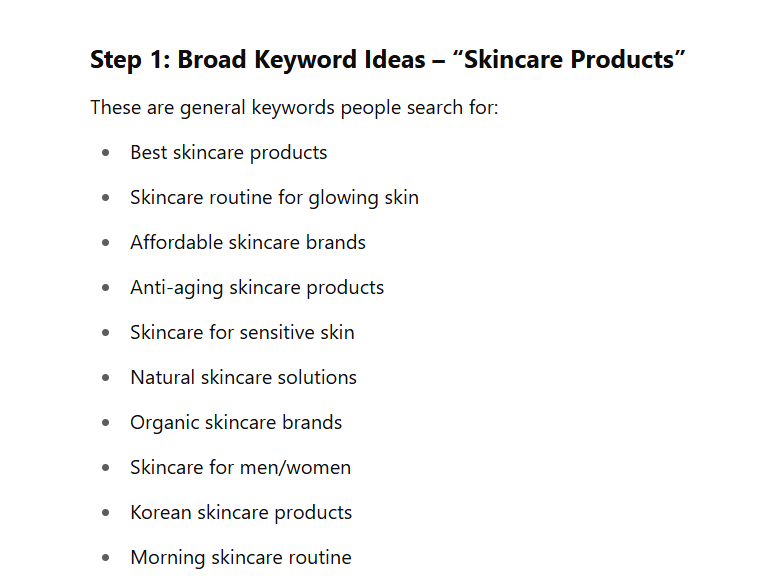
ChatGPT can provide:
- A wide range of relevant keyword suggestions, including long-tail and location-specific keywords
- Categorized keywords based on user intent or search funnel stage
- LSI (Latent Semantic Indexing) keywords that support your main keyword themes
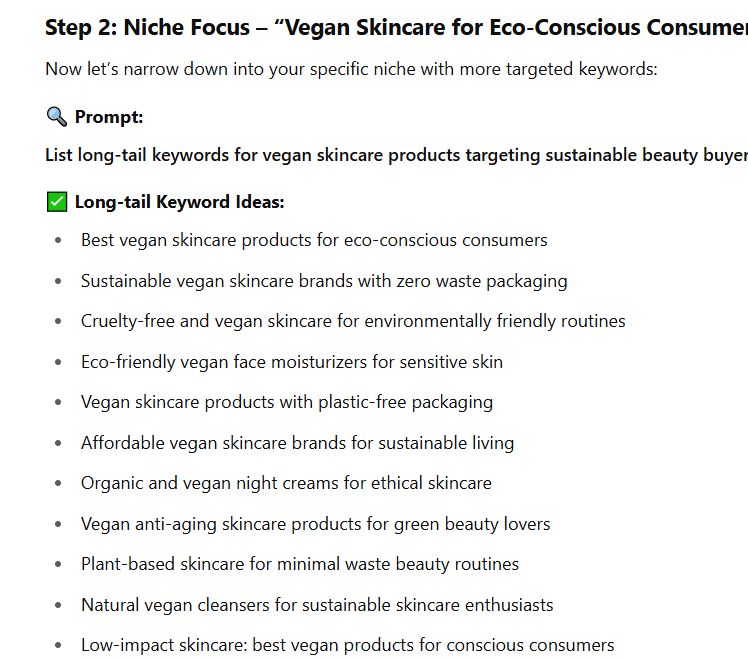
Once you receive a keyword list, review and refine it by feeding the results into advanced tools like SEMrush, Ahrefs, or Moz. This step ensures you’re working with keywords that are relevant but not overly competitive, giving you a better chance to rank.
Beyond just identifying keywords, ChatGPT can help you understand how to implement them. Ask for content ideas, meta description suggestions, or optimized headings based on the keywords you’ve selected. You can even request tailored keyword strategies for local businesses, making it a powerful support tool for local SEO services.
Conduct a competitive analysis
One of the 5 ways to use ChatGPT for SEO is by leveraging it to analyze your competitors and uncover strategic insights. When used thoughtfully, ChatGPT can help you identify gaps and opportunities in your SEO and Social Media Marketing efforts.
Here’s how to effectively use ChatGPT and SEO together for competitor analysis:
1. Identify Key Competitors: Start by listing your main competitors in the industry. For example, if you’re in the travel niche, figure out which travel blogs are consistently ranking at the top of Google for your target keywords.
2. Ask Specific SEO Questions: To get the best results, avoid vague queries. Instead, ask something focused like:
“What SEO techniques are top travel blogs using in their meta descriptions today?”
3. Analyze Their SEO Content Structure: Prompt ChatGPT with requests like:
“Evaluate the keyword and content strategy used by leading eco-friendly travel blogs.”
This can help you understand how high-performing content is structured and which SEO elements are prioritized.
4. Explore Backlink Opportunities: Backlinks are a major ranking factor. Ask ChatGPT:
“What kinds of websites typically link to high-ranking travel blogs?”
You can use this intel to inspire your own outreach or guest posting strategy.
5. Compare and Adjust Your Strategy: Take all the insights from ChatGPT and compare them with your current SEO strategies. Identify where you’re falling short or where there’s an angle your competitors haven’t tapped into yet.
By integrating ChatGPT into your research process, you’ll not only gain a clearer picture of what works in your niche but also refine your own strategies to stay ahead of the competition.
Build smarter backlinks with ChatGPT
One of the 5 ways to use ChatGPT for SEO is to level up your link-building strategy. Backlinks remain a powerful signal for search engines — boosting your site’s authority, credibility, and SERP rankings. While many tools exist for backlink discovery, ChatGPT stands out for its flexibility and creative support.
Whether you’re offering PPC management services or running a content-heavy site, ChatGPT can help streamline the backlink-building process in several ways:
- Strategic Planning: Ask ChatGPT to help you map out an effective backlink strategy tailored to your niche. It can suggest outreach methods, content angles, and timing tips to improve your chances of success.
- Site Prospecting: Use ChatGPT to identify potential websites for guest posting or content collaboration. Just prompt it with something like, “List high-authority blogs accepting guest posts in the digital marketing space.”
- Personalized Outreach: ChatGPT can draft compelling outreach emails that resonate with different publishers. You can even ask it to create follow-up messages if you don’t get a response.
- Content Ideation for Backlinks: Need content that earns links naturally? Have ChatGPT brainstorm ideas for link-worthy assets such as data-driven posts, how-to guides, or industry trend roundups.
- Focus on Authority: High-quality backlinks from credible sources act like trust signals to search engines. ChatGPT can help you identify these targets and tailor your pitch to match their content style and audience interests.
- By leveraging ChatGPT in your backlink campaigns, you save time and enhance the quality of your SEO efforts. It’s an excellent AI partner, not just for outreach, but for building the kind of authority that drives long-term organic growth.
Enhance Your SEO Strategy with ChatGPT
Integrating ChatGPT into your digital marketing toolkit can do more than just save time on repetitive tasks — it can sharpen your content, improve targeting, and elevate your visibility in search results. One of the 5 ways to use ChatGPT for SEO is to streamline content creation while aligning it more closely with SEO best practices.
By generating ideas, refining messaging, and supporting keyword integration, ChatGPT helps you craft content that connects with your audience and meets search engine standards. It’s also playing an expanding role in AI-powered software development, with businesses increasingly adopting ChatGPT-driven tools across different digital applications.
That said, using ChatGPT responsibly is key. Always fact-check the information it generates, since it draws from data up to its most recent training cut-off. While it’s an excellent resource for ideation and drafts, human editing is essential to ensure the final content feels authentic, accurate, and genuinely valuable to your readers.
When used thoughtfully, ChatGPT can boost your engagement, simplify your SEO workflow, and strengthen your overall digital strategy. Want to get started? Begin by exploring the 5 ways to use ChatGPT for SEO, and you’ll quickly discover its potential to transform your content marketing efforts.
Conclusion
Leveraging 5 ways to use ChatGPT for SEO can significantly enhance your content creation and marketing strategies. By streamlining tasks like keyword research, content optimization, and backlink outreach, ChatGPT empowers you to improve your SEO efficiency and effectiveness. Embrace this AI tool thoughtfully, and it can help you stay ahead in the competitive digital landscape.