

Asian grocery stores have had a significant impact on the Canadian supermarket industry in recent years due to the increasing demand for Asian products. The growing popularity of Asian cuisine, rising numbers of Asian immigrants, and evolving consumer preferences are among the factors driving this trend. As a result, Asian grocery stores are becoming more commonplace in Canada, reflecting the changing demographics and tastes of Canadian consumers.
Individuals cooking and dining at home more regularly and looking for new ingredients and flavors to try with COVID-19 epidemic has also increased demand for Asian grocery stores.
Numerous individuals with Asian backgrounds are looking for ethnic food ingredients for everyday cooking as a result of the dramatic increase in the Asian population in North America, and those who do not belong to a particular Asian demographic are still looking for ethnic ingredients in order to broaden their horizons and try out various cultural cuisines and unique ingredients.
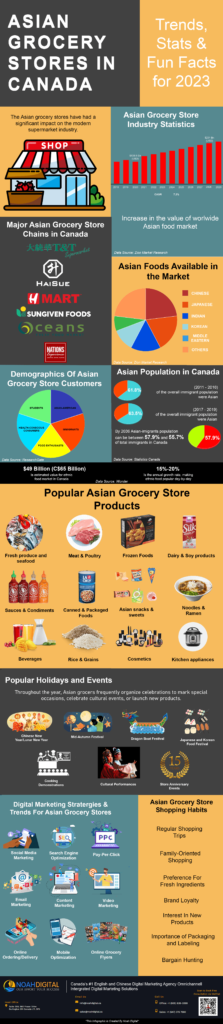
Uncover the hottest trends in Asian Grocery Stores in Canada for 2023! We’ve created this Infographic to make your reading experience effortless, so you can stay ahead and embrace the exciting developments in the world of Asian grocery shopping as follows:
- Major Asian Grocery Stores specifically in Canada
- Demographics Of Asian Grocery Store Customers
- Popular Asian Grocery Store Products
- Popular Holidays And Events
- Digital Marketing Strategies & Trends For Asian Grocery Stores
- Asian Grocery Store Shopping Habits

Major Asian Grocery Stores Specifically in Canada
Let’s take a look at some of the biggest Asian grocery stores located in Canada.
- T&T Supermarket – With locations in around 30 Canadian cities, T&T Supermarket is one of the largest Asian supermarket chains. Their goal is to introduce people to a variety of Asian cuisine and to make real Asian food widely available to Asian-Canadian families. T&T is the go-to spot for anyone seeking an authentic Asian culinary experience because of its promise of outstanding service, taste, and excellent quality. T&T Supermarket has successfully expanded its reach to become one of the most reputable online Asian grocery stores.
- HaiSue – With locations in Toronto, Vancouver, and Richmond, HaiSue is a Chinese supermarket that provides a wide range of high-quality Chinese products to customers in Canada. Their selection includes fresh produce, meat, seafood, and an extensive range of imported Chinese food products. HaiSue is dedicated to offering competitive pricing and exceptional customer service.
- Hmart – With locations in Ontario and British Columbia, Hmart is a Korean supermarket chain that provides a wide range of Korean and other Asian products to customers in Canada. Hmart is dedicated to offering high-quality products at competitive prices and prides itself on providing exceptional customer service. They offer a wide range of products, including fresh produce, meat, seafood, and an extensive range of imported Korean food products.
- Sungiven Foods – After experiencing great success in China, Sungiven Foods expanded to the North American market. The company is dedicated to serving Asians of all generations as well as any clients who want healthy Asian cooking and cuisine. With thousands of high-quality, reasonably priced, and globally sourced private-label items, Sungiven Foods provides a wide selection of nutritious daily foods, including fresh fruits from all over the world and organic veggies from Canada and Central America.
- Oceans Fresh Group – Oceans Fresh Group is a multi-national fresh food shopping destination in Canada that includes Nations Experience and Oceans Fresh Foods Market, adopting the slogan “Where East Meets West”. Oceans Fresh Foods Market is known for its premium offerings and prides itself on being a multi-ethnic fresh food supermarket that serves diverse communities by providing a wide variety of home-cooked meals representing diverse global cuisines. On the other hand, Nations offers a wide range of fresh produce, bakery, seafood, deli, grocery items, and even a playground for kids. They also offer a large selection of global food products, such as home goods, soup bases, drinks, and unusual snacks, in addition to ready-to-eat Asian and Western food.
Demographics Of Asian Grocery Store Customers
Asian populations in Canada make up a significant portion of the country’s immigrant population and contribute to its ethnocultural diversity. In 2016, almost half (48.1%) of all immigrants in Canada were born in Asia, including the Middle East. Asian countries such as the Philippines, India, China, Iran, Pakistan, Syria, and South Korea were among the top countries of birth for recent immigrants. From 2017 to 2019, about 63.5% of newcomers to Canada were born in Asia. This proportion is slightly higher than the previous years (2011-2016) when it was 61.8%. According to Statistics Canada’s population projections, by 2036, immigrants born in Asia could represent between 55.7% and 57.9% of all immigrants in Canada.
The racial and ethnic background of Asian grocery store consumers may vary based on the store’s location, the types of products it offers, and the surrounding community. Nonetheless, Asian grocery stores typically draw a wide variety of clients, such as:
| Asian-Americans | Those of Chinese, Korean, Japanese, Vietnamese, Filipino, and other Asian heritage who seek out familiar goods like rice, noodles, and spices belong to this group. |
| Immigrants | Recently arrived Asian immigrants who do not speak English well might prefer to shop in Asian supermarkets where they can find goods that are similar to those in their native country. |
| Food enthusiasts | Asian grocery stores are also popular among customers who enjoy cooking Asian cuisine or experimenting with novel and unusual ingredients. |
| Health-conscious consumers | A vast variety of fresh produce is available in Asian grocery stores, including Asian greens and fruits which are uncommon in Western supermarkets. Due to their distinctive assortment of fresh fruit, these establishments may be preferred by customers who value their health. |
| Students | On college campuses, Asian grocery stores may draw a lot of students looking for inexpensive, quick-to-prepare meals and snacks. This is particularly true for international students, who often find comfort and familiarity in the diverse range of products available at these stores, allowing them to enjoy tastes from their home countries while studying abroad. |
Popular Asian Grocery Store Products
- Fresh produce and seafood: This category includes a range of fresh produce such as bok choy, ginger, and lemongrass, as well as fresh seafood like shrimp, crab, and fish.
- Meat and poultry: This category includes different types of meat and poultry used in Asian cooking, such as pork, beef, chicken, and duck.
- Frozen foods: This category includes a wide range of frozen foods, such as dumplings, bao buns, seafood, and vegetables, as well as frozen ready-to-eat meals.
- Dairy and soy products: This category includes milk, yogurt, and cheese, as well as non-dairy alternatives such as soy milk, almond milk, and coconut milk. Tofu and products made of it, such as Fresh Tofu, Mandarin Egg Tofu, Wing Hing Regular Tofu, and San Sui Firm Tofu are other popular choices among shoppers.
- Sauces and condiments: This category includes soy sauce, oyster sauce, hoisin sauce, fish sauce, chili sauce, and a variety of other sauces and condiments used in Asian cooking.
- Canned and packaged foods: This category includes canned fruits, vegetables, and seafood, as well as packaged soups, stews, and instant noodles.
- Asian snacks and sweets: This category includes a range of sweet and savory snacks such as rice crackers, dried fruit, nuts, and candies, as well as popular Asian sweets like mochi, Pocky sticks, and red bean paste desserts.
- Noodles and ramen: This category encompasses a diverse selection of noodle types, including soba, udon, rice noodles, egg noodles, and specifically, ramen.
- Beverages: This category includes a wide range of beverages such as tea, coffee, soft drinks, and alcoholic beverages like sake and soju.
- Rice and grains: This category includes various types of rice, including jasmine, basmati, and sticky rice, as well as other grains such as quinoa, barley, and millet.
- Cosmetics: Asian grocery stores often offer a selection of popular cosmetics and skincare products from Asian brands, catering to various beauty needs.
- Kitchen appliances: Asian grocery stores may also carry essential kitchen appliances like rice cookers, hot water dispensers, and electric kettles, which are commonly used in Asian households for efficient food preparation.
Popular Holidays And Events
Asian grocery stores frequently have sales during holiday seasons like Chinese New Year or Lunar New Year, where they offer discounts on products commonly used during those holidays. Additionally, these stores often hold celebrations throughout the year to commemorate special or cultural occasions, as well as to introduce new products. Some popular events you may come across include:
- Chinese New Year/Lunar New Year: This is one of the biggest events celebrated in East and South-east Asia and is often marked with special displays, decorations, and traditional foods.
- Mid-Autumn Festival: Also called Moon Festival, this harvest festival is celebrated in several Asian cultures and is marked by special foods like mooncakes and lantern displays.
- Dragon Boat Festival – The Dragon Boat Festival, also known as Duanwu Festival, is a traditional Chinese festival that is celebrated on the 5th day of the 5th month of the lunar calendar, which usually falls in May or June. The festival is held to commemorate the famous poet and statesman Qu Yuan and is characterized by dragon boat races, delicious food, and various customs and traditions.
- Japanese and Korean Food Festival – The Japanese and Korean Food Festival is an event that celebrates the diverse and flavorful cuisines of Japan and Korea. It provides a platform for people to experience the authentic flavors, culinary techniques, and cultural aspects of these two Asian countries. The festival showcases a wide range of Japanese and Korean dishes, attracting food enthusiasts and those interested in exploring new culinary experiences.
- Cooking demonstrations: Some stores offer cooking demonstrations featuring traditional or popular Asian dishes, with samples for customers to try.
- Cultural performances: Some stores may host cultural performances, such as lion dances or traditional music, during special events.
- Store anniversary events: Stores may hold special events to celebrate their anniversary, offering discounts, promotions, and giveaways to customers.
Digital Marketing Strategies & Trends For Asian Grocery Stores
Supermarket strategies for Asian grocery stores in the digital age involve a range of digital marketing approaches, leveraging various channels. These strategies aim to attract and engage customers effectively. Here are the most common digital marketing strategies for Asian grocery stores:
| Social media marketing | Asian grocery stores can use social media platforms like Facebook, Instagram, and Twitter to showcase their products, share recipes, and offer promotions. |
| SEO (Search Engine Optimization | For Asian grocery stores, SEO is an important strategy to improve their online visibility and attract more customers. By optimizing their website for relevant keywords related to their products and services, they can improve their search engine rankings and make it easier for potential customers to find them online. |
| PPC (Pay-Per-Click) Advertising | PPC advertising is a valuable tool for Asian grocery stores to promote their products and reach their target audience. By creating targeted ads on search engines and social media platforms, businesses can effectively promote their products and services to potential customers. |
| Email marketing | Email newsletters can be used to announce new products, promotions, and events, as well as to share recipes and cooking tips. Besides promoting their products, email marketing is a great way of engaging with their customers. |
| Content marketing | Creating and sharing informative and engaging content, such as blog posts or videos, can help to position the store as an authority on Asian cuisine and culture. |
| Video Marketing | Having a YouTube channel for video marketing is another effective strategy for Asian grocery stores to engage customers and promote their products through captivating videos. |
| Online grocery shopping | Asian grocery stores aim to improve convenience for customers by introducing mobile apps or user-friendly websites for online shopping. This allows customers to easily browse and purchase products from the comfort of their homes, with the option for convenient home delivery. |
| Mobile Optimization | Ensuring that the store’s website and online ordering platform are mobile-friendly can help to reach customers who prefer to shop on their mobile devices. |
| Online Grocery Flyers | Asian grocery stores also often use online grocery flyer to share weekly deals and product information with customers. These flyers, available on their website or through third-party grocery platforms, enhance the shopping experience and promote their offerings effectively. |
The marketing techniques used to attract customers are also mainly based on who is the target audience and what languages they speak. Some supermarkets communicate with their target audience in Chinese or use English or French instead. In addition to languages, supermarkets should make sure to follow certain nuances when implementing Chinese marketing in North America or when positioning their brand to Asian customers in Canada.
Noah Digital offers a comprehensive guide to Chinese advertising in Canada, providing valuable insights and strategies for effectively reaching and engaging with the Chinese-speaking audience.
To complement the digital marketing strategies for Asian grocery stores, partnering with a specialized SEO company in Markham, like Noah Digital, can further boost their online presence, optimize search engine rankings, and tailor marketing approaches to effectively reach the diverse target audience.
Asian Grocery Store Shopping Habits
The buying habits of Asian consumers can differ depending on their cultural heritage and personal preferences. Nonetheless, you might see the following typical buying practices:
- Regular shopping trips: Many customers visit Asian grocery stores regularly, often weekly or bi-weekly, to stock up on fresh produce, meat, and pantry staples.
- Family-oriented shopping: Asian grocery stores often cater to families, and it’s not uncommon for customers to shop with their family members or purchase items in bulk.
- Preference for fresh ingredients: Customers at Asian grocery stores often place a high value on fresh ingredients, such as produce and meat, and may prefer to shop for these items at a specialty store.
- Brand loyalty: Customers may have specific brand preferences for certain products and will look for those brands when shopping.
- Interest in new products: Asian grocery stores often carry a wide variety of unique and hard-to-find products, and customers may enjoy trying out new items or brands.
- Importance of packaging and labeling: Clear and informative packaging and labeling can be important to customers, particularly for those with specific dietary restrictions or preferences.
- Bargain hunting: Some customers may look for bargains or special promotions, such as bulk discounts or clearance items.
Purchasing food from Asian grocers provides a cultural experience that emphasizes the use of local, seasonal ingredients, the preservation of strong family traditions, and the availability of unique and distinct products.
Considering this, discover the fascinating world of Asian grocery stores through our captivating infographic! Join the conversation and share this insightful visual masterpiece on your social media or website. Let’s spread the excitement and inspire others to explore the wonders of Asian grocery shopping together!
Conclusion
The Asian grocery store industry is a growing and dynamic market that caters to customers looking for authentic and hard-to-find Asian products. These stores offer a wide variety of products, including fresh produce, meat, seafood, pantry staples, and specialty items, and often serve as cultural hubs for their communities.
In recent years, Asian grocery store marketing has evolved to incorporate digital marketing strategies, including social media marketing, search engine optimization (SEO), Pay-Per-Click Advertising (PPC), email marketing, content marketing, and many other techniques, like online grocery flyers. This shift aims to effectively reach and engage a broader audience. Additionally, with the emergence of larger supermarket chains and online retailers, the industry has become more competitive, prompting Asian grocery stores to adapt and innovate their marketing approaches.
Nowadays more and more non-Asian consumers are being attracted to Asian grocery stores due to their affordable prices, wide variety of products, and inclusion of healthy food options. Furthermore, the industry’s sustained growth can be attributed to the high demand for Asian products and the expanding Asian-American population in North America. As such, the industry is expected to continue to grow and evolve in the coming years.
For more information on Asian grocery store trends and access to our infographic, contact us today. Don’t miss out on the opportunity to stay updated and gain valuable insights into this exciting industry. Reach out to us now and be at the forefront of Asian grocery store knowledge!