

Data blending involves merging information from multiple sources into a unified dataset, enabling businesses to analyze data holistically and uncover valuable insights. In marketing, it helps understand customer behaviour, optimize campaigns, and improve multi-channel attribution by providing a complete view of the customer journey.
For businesses, data blending is crucial for accurate decision-making, trend analysis, and resource optimization. Ignoring it can lead to fragmented data, incomplete insights, and missed opportunities, ultimately hindering growth and competitiveness. Embracing data blending is essential for staying ahead in today’s data-driven world.
Table of contents
Understanding Data Blending
What is data blending? Data blending is the process of combining data from multiple disparate sources to create a unified and more meaningful dataset for analysis. It allows data analysts, engineers, and marketers to merge information from platforms such as CRM systems, web analytics, social media, and email marketing tools—without the need for a unified storage solution. This approach is fast, flexible, and enables deeper insights. By eliminating data silos and merging information, businesses can extract deeper insights, making it a cornerstone of a robust digital marketing strategy.
By integrating isolated data sources, often referred to as data silos, businesses can consolidate diverse data points into a single view. For example, blending sales figures, customer feedback, and digital marketing trends can uncover hidden correlations, identify opportunities, and address challenges. This ability to consolidate diverse datasets supports critical processes like conversion rate optimization, allowing businesses to improve decision-making based on comprehensive and actionable insights.
Data Blending vs. Data Transformation
Data blending and data transformation are often confused, but they serve distinct purposes in the analytics workflow. Understanding the difference is essential for knowing when to use each process.
Data Blending
Data blending is focused on combining data from multiple sources to create a unified dataset that can be analyzed together. It is typically used for quick, exploratory analysis, helping businesses answer specific questions in real time.
Data Transformation
Data transformation, on the other hand, involves a more in-depth process of converting data into a standardized format suitable for long-term storage and detailed analysis. This includes tasks like normalizing, aggregating, and enriching data to ensure consistency and prepare it for use in data warehouses or other systems.
While both processes are crucial, data blending is more about merging and analyzing data from different sources quickly, whereas data transformation prepares data for broader, more structured use over time.
| Aspect | Data Blending | Data Transformation |
| Purpose | Quick integration for exploratory analysis | Comprehensive preparation for long-term storage and analysis |
| Process | Collecting, cleaning, and joining data from various sources | Normalizing, aggregating, and enriching data |
| Flexibility | Highly flexible, ideal for ad-hoc analysis | Less flexible, requires detailed planning |
| Complexity | Simpler and quicker | More complex and time-consuming |
| Typical Use Case | Merging campaign data with customer feedback for immediate insights | Creating a standardized data warehouse for detailed reporting |
The Importance of Data Blending
In business, data blending is essential for deriving actionable insights from a wide range of data sources. By combining different datasets, companies can create a unified view that improves decision-making and boosts operational efficiency. For example, during a product launch, businesses can blend live sales data with social media feedback to refine strategies, ensuring alignment with search engine optimization (SEO) efforts and enhancing campaign outcomes.
For instance, retailers can blend in-store purchase data with online shopping behaviour to uncover valuable trends and customer preferences. This enables them to develop targeted marketing strategies that foster customer loyalty and drive sales.
Data blending also supports real-time analytics, which is crucial for quickly adapting to market changes. For example, during a product launch, businesses can blend live sales data with social media feedback to adjust their marketing strategies instantly, ensuring a successful campaign.
Moreover, data blending simplifies processes, reducing the need for extensive IT support and expensive data warehousing solutions. This allows companies to invest savings into other key business initiatives, such as innovation, product development, or market expansion.
Benefits of Data Blending
Data blending is a powerful technique that combines data from multiple sources to create a unified, actionable dataset. By merging disparate data points, businesses can gain deeper insights, make more informed decisions, and enhance their overall efficiency.

The benefits of data blending extend across various functions, from marketing to operations, enabling organizations to adapt quickly to changes and drive strategic success. In this way, data blending empowers businesses to unlock the full potential of their data and gain a competitive edge.
On-Demand Reporting
Ad hoc reporting is one of the most common applications of data blending. When analysts or business users need specific data for a particular task, they can use data blending tools alongside database management systems (DBMS) to quickly pull together an aggregated dataset. This is particularly useful when insights are needed outside of regular reporting cycles or predefined schedules.
Enhanced Visualization
Data blending tools can generate visualizations, such as infographics and charts, after aggregating data from various sources. Dynamic visualizations generated from blended datasets allow teams to present data trends clearly, supporting decisions in areas like PPC management.
Improved Collaboration
The flexibility of data blending, combined with its visualization capabilities, makes it an excellent tool for helping non-technical business users gain valuable insights. For instance, presenting a blended data set that reveals a critical pattern to senior management can emphasize key points and speed up the process of finding solutions to business challenges.
Elimination of Data Silos
Data silos remain common in enterprise environments. Data blending helps to break down these silos by allowing data from different sources to be aggregated on demand, reducing the limitations and inefficiencies associated with isolated data sets.
Applications
Data blending is a powerful tool that enables businesses to integrate and analyze information from multiple sources, providing deeper insights and better decision-making.
By consolidating diverse datasets, organizations can uncover trends, measure performance, and streamline processes. Here are some key applications across various industries:
Marketing
In today’s multichannel marketing landscape, understanding campaign performance across various platforms is essential. Data blending enables marketers to analyze spend across advertising formats like paid search and social media, while also tracking metrics such as clicks, followers, and conversions with ease.
Retail
Retailers manage a broader range of products compared to B2B sales, making data blending particularly valuable. By aggregating data from different retail sources, businesses can seamlessly compare sales targets to actual performance across multiple product categories, all within a single, visualized dataset.
Banking
Large banks handle vast amounts of data daily from diverse sources due to their extensive customer base. Data blending allows these institutions to efficiently analyze customer details, from investment portfolio performance to fintech transactions, helping them tailor offerings and enhance the overall customer experience.
Key Steps in Data Blending
Data blending consists of several key steps that integrate diverse data sources into a unified, actionable dataset. Each step is carefully designed to optimize the data preparation process, ensuring both accuracy and efficiency.
Data Acquisition
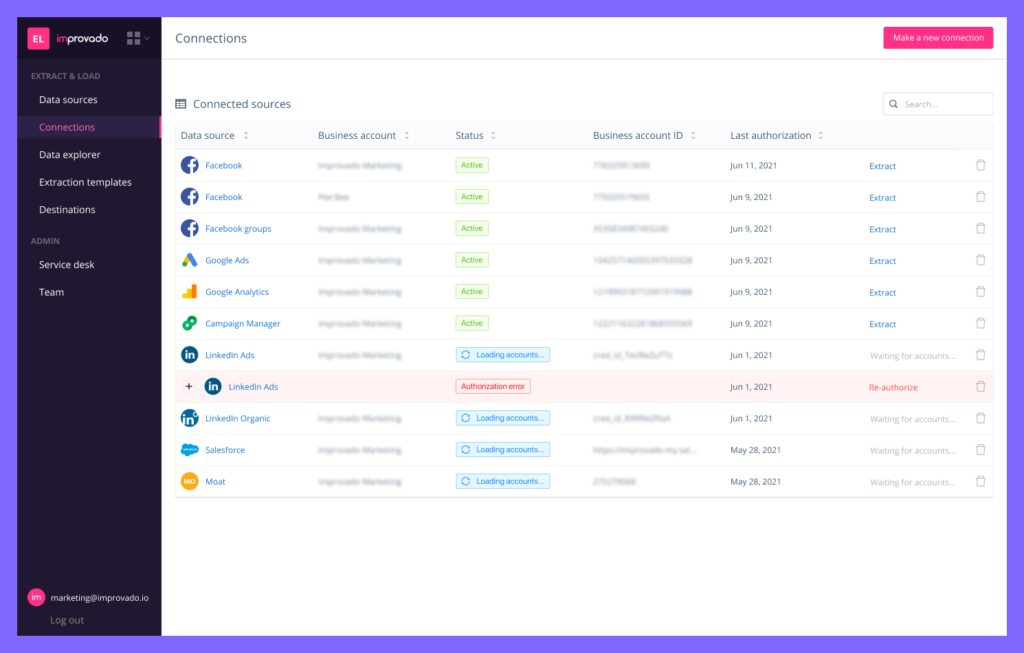
Gather data from a wide range of sources, including internal databases, CRM systems, cloud applications, and external platforms such as social media and web analytics tools.
source:improvado
This process may involve collecting sales figures from point-of-sale systems, customer feedback from social media channels, and campaign performance metrics from marketing automation platforms. Simplify and enhance data acquisition by leveraging automated solutions like Noah Digital.
Data Cleansing
Even after aggregation, data may not be suitable for analysis. The next step is data cleansing, which ensures accuracy and consistency by removing duplicates, correcting errors, filling in missing values, and standardizing formats. For example, ensuring uniform formatting of customer contact data and addressing discrepancies in sales data before blending with digital marketing metrics can significantly improve data quality.
Joining Data
Once cleaned, data from various sources is merged using methods like joins, unions, or relationships, depending on the structure and analysis needs. Combining transactional data with customer demographics can reveal purchasing patterns across segments, providing valuable insights.
Data Transformation
The data is then transformed into a format suitable for analysis. This involves normalizing the data, aggregating it into meaningful metrics, and ensuring it follows the required structure.
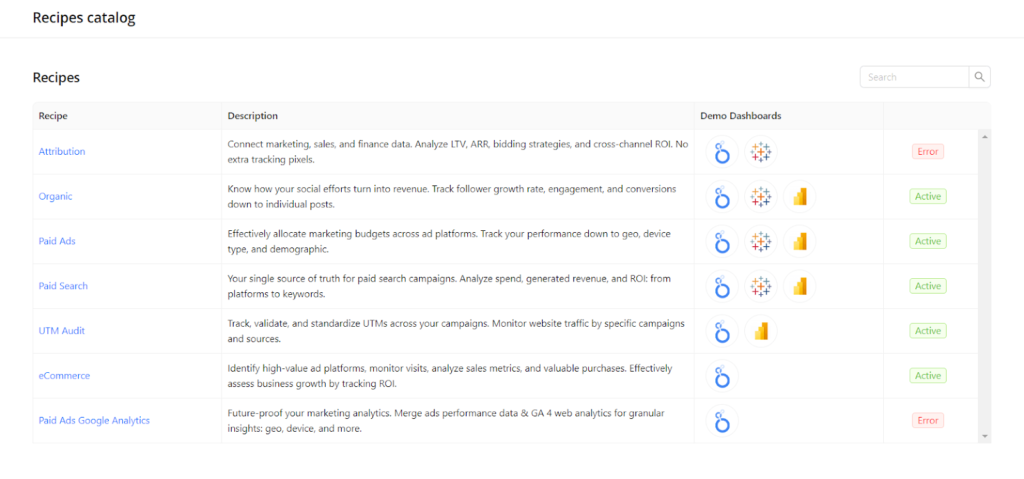
For instance, aggregating daily website traffic into monthly reports can highlight visitor behaviour trends and inform strategic decisions.
Validation and Refinement
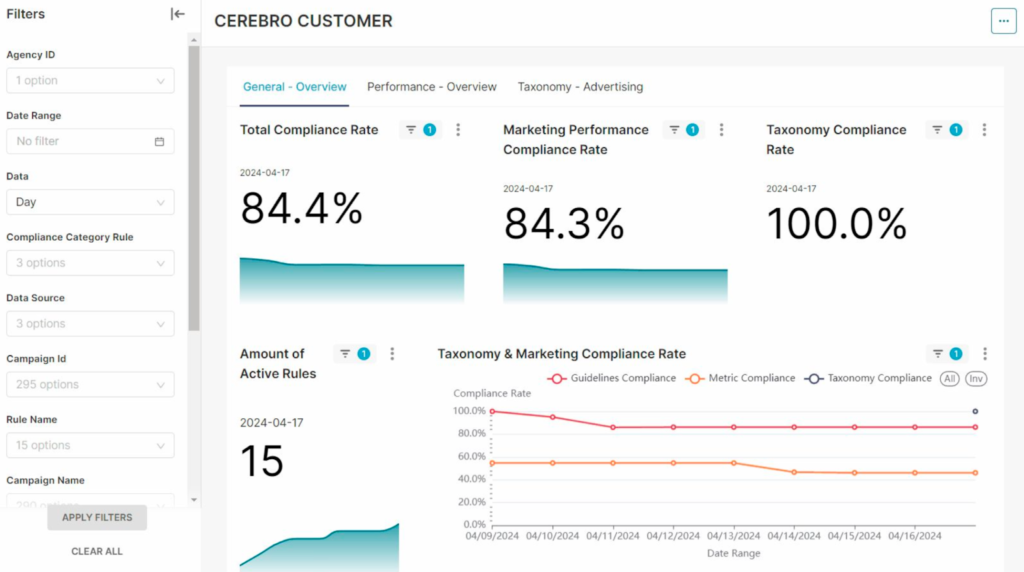
The blended dataset is validated for accuracy and integrity. This includes checking for anomalies, verifying relationships, and ensuring it meets the necessary analysis standards. Cross-referencing campaign performance with CRM data helps maintain consistency and reliability.
source:improvado
Automated solutions like Marketing Data Governance, an AI-powered campaign management tool, can further simplify the validation process by automatically detecting anomalies and discrepancies.
Integration with BI Tools
Finally, the blended data is integrated with business intelligence (BI) tools for visualization and analysis. This enables the creation of dashboards and reports that provide actionable insights. For example, visualizing blended customer journey data alongside conversion metrics helps optimize marketing strategies and boost campaign performance.
Marketing Data Blending Challenges and Solutions
Integrating data blending into your digital marketing strategy provides a comprehensive view of your campaigns and operations. Whether you’re conducting a digital marketing audit for global markets or enhancing social media marketing efforts, data blending empowers businesses to stay agile and competitive.
To fully harness the potential of data blending and address its challenges, adopting strategic best practices is crucial for ensuring precise, efficient, and scalable data integration.
Challenge: Integrating Data from Multiple Sources
Combining data from various sources can be a complex and time-intensive task. Differences in data formats, structures, and terminologies often make it difficult to create a unified dataset for comprehensive analysis.
Solutions
- Standardize Data Formats: Establish data standardization practices to maintain consistency in formats and structures across sources. Leverage data transformation tools to normalize datasets, simplifying the blending and analysis process.
- Leverage ETL Tools: Utilize Extract, Transform, Load (ETL) tools to automate the extraction of data from different sources, transform it into a uniform format, and load it into a centralized data warehouse. This automation reduces errors and streamlines data integration.
- Implement Data Mapping: Create a robust data mapping strategy to align fields from various sources. Proper mapping ensures that related data points are accurately merged, enabling more reliable analysis.
Challenge: Ensuring Data Quality and Consistency
Maintaining high-quality and consistent data is essential for accurate analysis and informed decision-making. Poor data quality or inconsistencies can lead to unreliable insights and flawed strategies.
Solutions
- Data Cleaning: Conduct regular data cleaning to eliminate duplicates, correct errors, and address missing values. Employ automated tools to streamline the process and sustain data quality.
- Validation Rules: Define and implement data validation rules to ensure that incoming data adheres to set quality standards. Automated validation checks can promptly detect and resolve inconsistencies.
- Continuous Monitoring: Establish ongoing monitoring and auditing of data quality. Use dashboards to track key metrics, quickly identify issues, and maintain consistent and reliable datasets.
Challenge: Integrating Data Across Platforms
Combining data from multiple marketing platforms, each with unique APIs and data structures, presents significant complexity and can consume considerable time.
Solutions
- API Integrations: Build robust API integrations to automate data extraction from various marketing tools. Alternatively, leverage platforms like Improvado, which offer over 500 pre-built API connectors, custom connector development, and comprehensive API management.
- Unified Data Layer: Establish a unified data layer to standardize and consolidate data from different platforms. This ensures consistent data formatting, simplifying the blending and analysis process.
Conclusion
Data blending is a vital process that enables businesses to merge diverse datasets, eliminate silos, and uncover actionable insights. By consolidating information from multiple sources, organizations gain a holistic view of operations, customer behaviour, and market trends, enhancing decision-making and agility.
This approach simplifies analysis, fosters collaboration, and delivers real-time insights that drive efficiency and innovation. By adopting robust tools and best practices, businesses can overcome integration challenges and harness the full potential of their data. In today’s data-driven world, data blending is essential for staying competitive and achieving sustainable growth.