

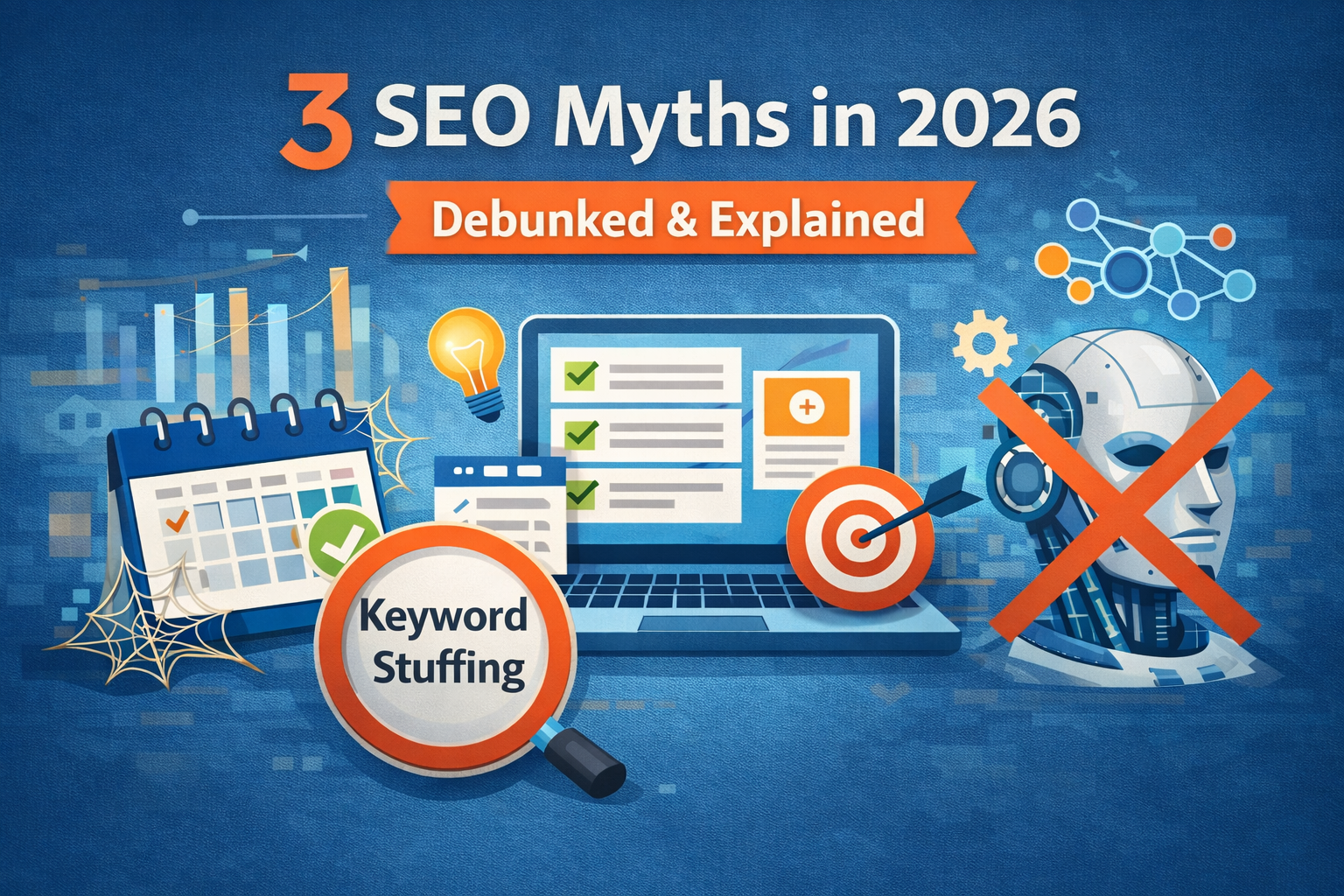
What was true in 2010, 2015, or even 2020 doesn’t necessarily hold anymore. Between advanced AI tools, generative search experiences, and an emphasis on user intent and experience, many long‑held beliefs about SEO are now outdated, and some are downright harmful if taken at face value.
Below, we explore 3 major SEO myths that many marketers and business owners still believe, but shouldn’t in 2026, and what the reality looks like.
Myth #1 — SEO Is Just Keywords and Keyword Stuffing Works
One of the most persistent myths, and one that still shows up in poorly optimized content, is the idea that SEO is just about putting the right keywords in the right places.
In the early days of search engine optimization, keyword placement and density mattered a lot. But today, modern search engines and AI‑driven ranking systems understand intent, context, and semantic meaning. That means:
- Search engines interpret what the searcher means rather than just matching exact words.
- Stuffing a page with a keyword doesn’t improve rankings and can hurt readability and user experience, which in turn harms SEO performance.
- Quality content that answers user intent — clearly, naturally, and comprehensively is what wins visibility today.
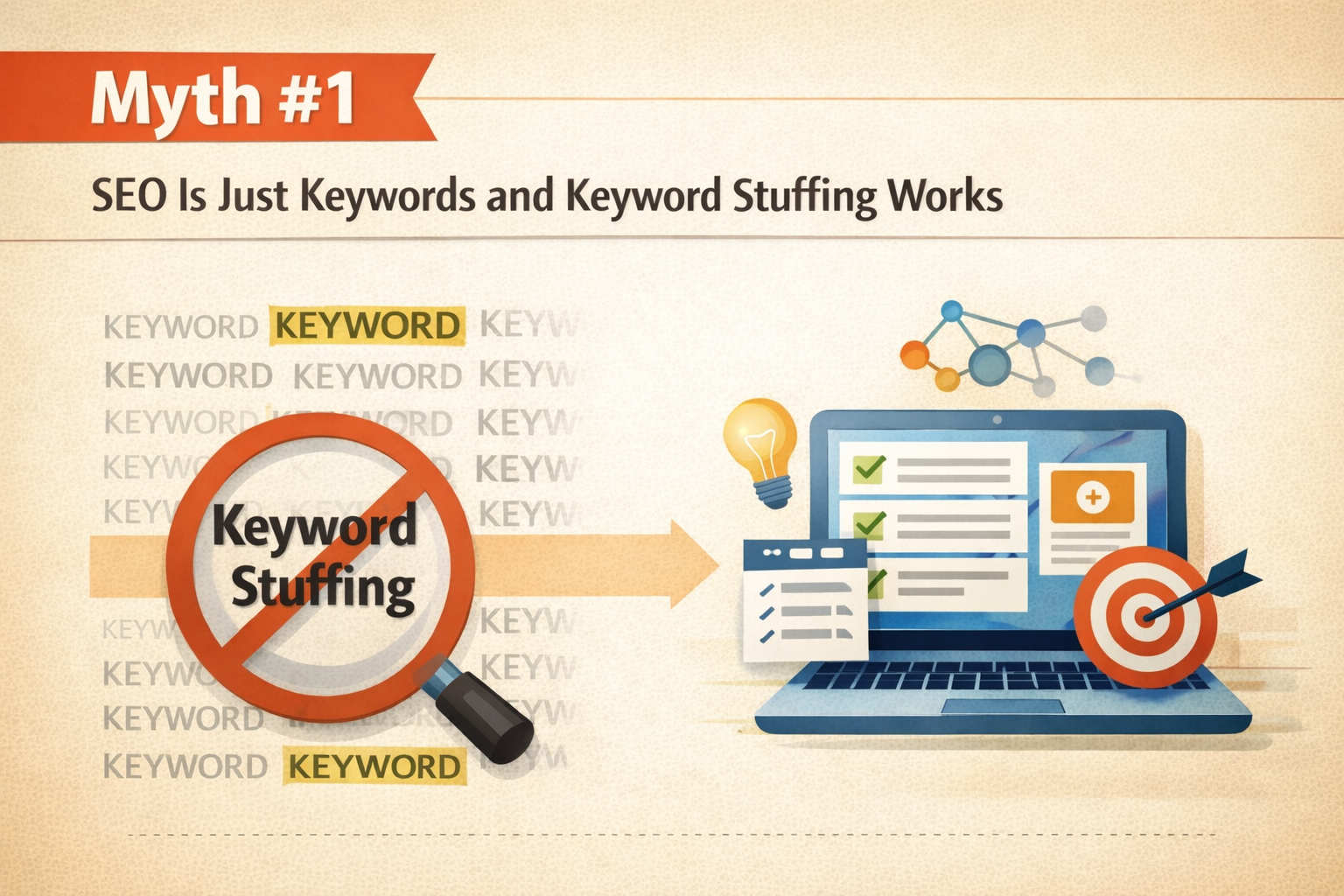
Truth: SEO still needs relevant keywords, but as anchors of intent, not as dense tags loaded everywhere. Effective SEO is about optimizing for meaning and clarity, not frequency.
Myth #2 — SEO Is a One‑Time Project, and Then It’s “Done”
Another common belief is that once you’ve “optimized your website,” you can sit back and expect rankings to stay high forever. This idea is dangerously outdated.
Search engines update their algorithms hundreds of times per year, competitors refine their strategies constantly, and user behaviour changes over time. SEO is no longer a one‑off setup that you implement once and forget; it’s a continuous process of improvement, monitoring, and adaptation.
Key reasons SEO is ongoing include:
- Algorithm changes by major engines like Google and Bing
- New content and competitors entering your niche
- Evolving user search behaviour and expectations
- Technical issues that can arise on your site over time
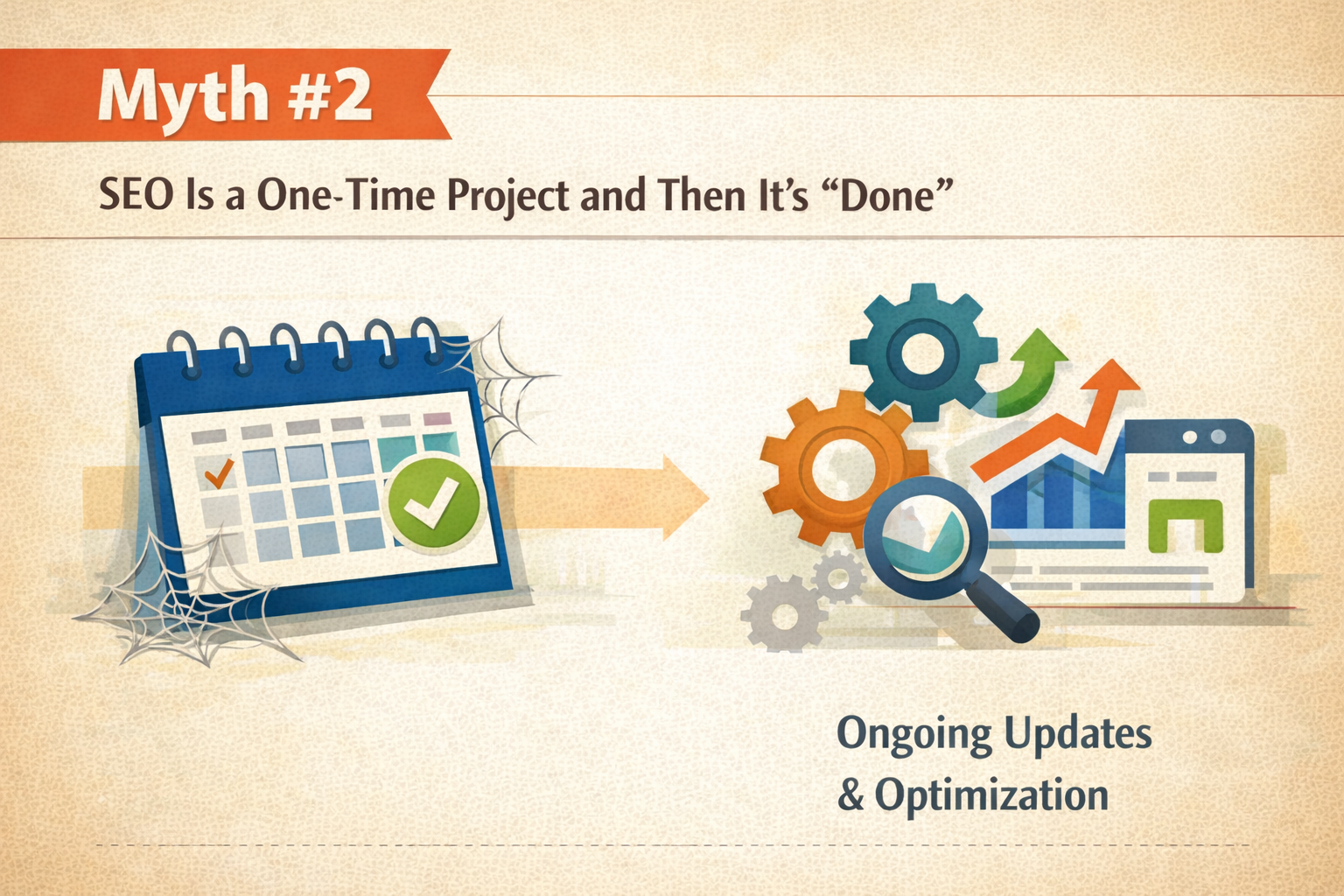
Truth: Treating SEO as maintenance, not a project with a finish line, leads to better long‑term rankings and traffic growth.
Myth #3 — AI Will Replace SEO or Make It Obsolete
In 2026, this myth has grown louder with the rise of generative AI and “AI search engines” like Gemini, Claude, and Perplexity. Some say traditional SEO is dead because AI can provide direct answers without users clicking through to websites.
But here’s the reality:
- AI tools don’t generate brand new information — they rely on existing indexed content as sources. If your content isn’t discoverable or optimized for visibility, AI won’t surface it.
- SEO isn’t replaced; it’s extended to include new considerations like optimizing for generative AI visibility, structured data, and clear semantic signals.
- AI and search engines still reward well‑written, authoritative content — so SEO remains foundational for visibility.
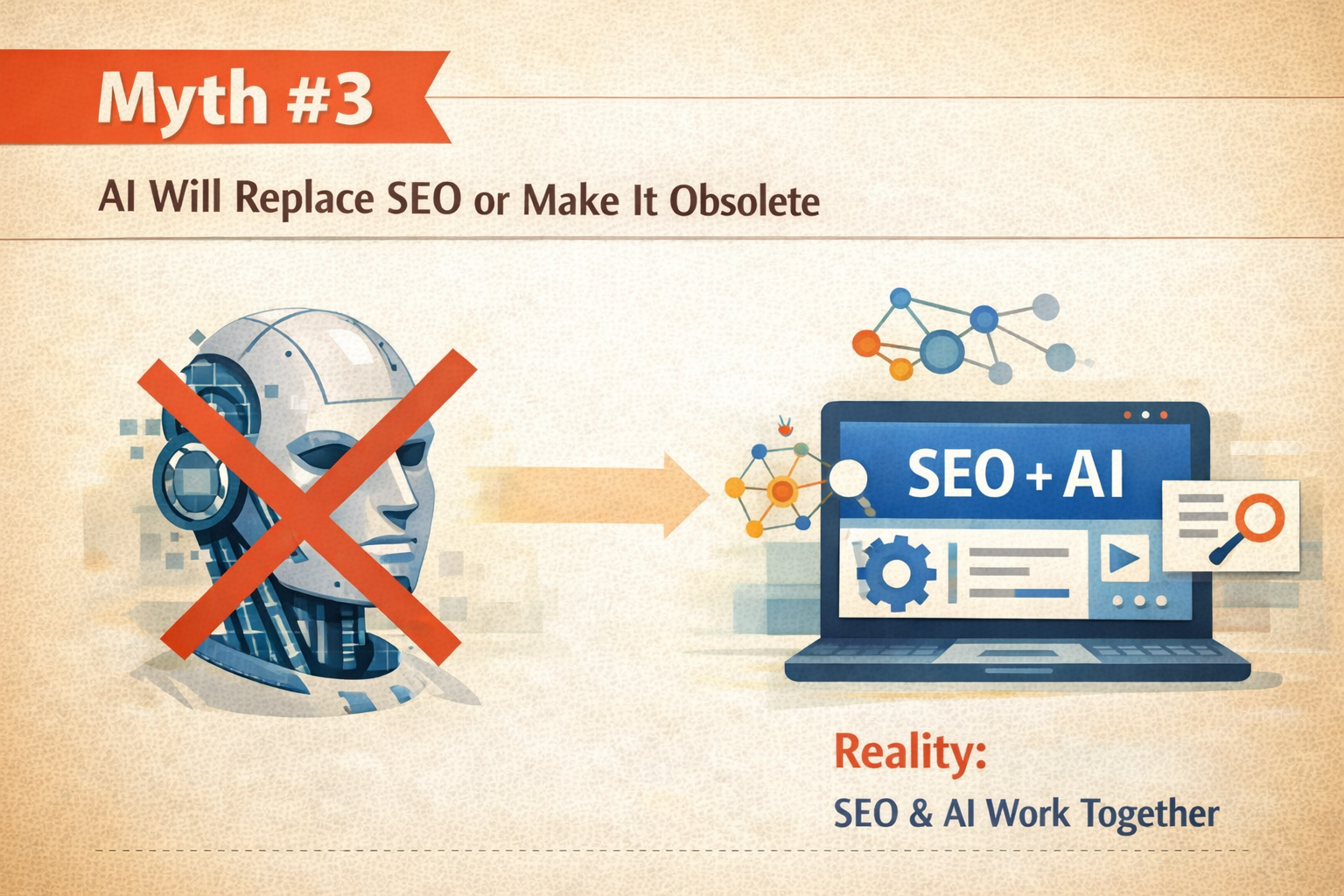
Truth: SEO and AI work hand in hand. Instead of replacing SEO, AI amplifies its importance. Content that is optimized for both human readers and AI search optimization will perform better across traditional search engines and AI-powered platforms, ensuring it’s discoverable and relevant in both environments.
Reddit’s Insights on SEO Myths
Reddit’s r/DigitalMarketing and r/SEO communities often discuss persistent SEO myths. One interesting thread explores outdated beliefs like keyword stuffing and the myth of one-time SEO fixes.
Biggest SEO myth you still see in 2026?
byu/GrouchyGovernment784 inDigitalMarketing
Final Thoughts
SEO in 2026 isn’t about hacks, shortcuts, or treating search optimization as a checkbox. The three myths above all share a common flaw: they focus on old habits that don’t align with how modern engines and users actually behave.
In reality, successful SEO today looks like this:
- Content built around user intent, not keywords only
- Constant optimization and adaptation, not one‑time fixes
- Integration with AI and generative search systems, not exclusion
Understanding and debunking these myths about SEO isn’t just academic — it directly impacts your visibility, traffic, and conversions in a world where search experiences are defined by relevance, context, and usefulness.