


Conducting thorough research and careful analysis is essential to communicating your message to a specific audience effectively. Engaging with and understanding the needs of your target audience, as well as interacting with your followers, is a fundamental strategy for business growth.
Social listening for small businesses involves understanding the broader context by examining both internal and external factors related to social media, but it’s important to stay within reasonable limits to avoid misinterpretation. If you regularly engage with your audience on social media, you have access to a wealth of information – from conversations happening under your posts, mentions in public discussions, or even comments on a competitor’s page. For small businesses, these social interactions are an invaluable resource, rich with insights waiting to be discovered and acted upon. Ignoring social listening can leave businesses blind to valuable feedback, emerging trends, and shifts in customer sentiment, ultimately hindering their growth and competitive edge.
Understanding Social Listening
What is social listening? Social listening, also known as social media listening, involves tracking and analyzing online discussions about a company, individual, product, or brand. In the realm of digital marketing strategy, social listening plays a crucial role by providing insights that drive data-driven decisions and optimize campaigns. This process is essential for improving conversion rate optimization, ensuring that marketing efforts are resonating effectively with the target audience.

The vast amount of unstructured data generated from these conversations makes it crucial for organizations to define clear objectives for their social media listening efforts. Depending on these goals, the appropriate tool might range from simple, free options like Google Alerts to comprehensive software suites that offer in-depth analysis and seamless integration with existing customer relationship management (CRM) systems. These tools are vital in refining search engine optimization (SEO) strategies by identifying trending keywords and understanding audience sentiment.
While social media and direct interactions hold value, social listening is rapidly becoming an essential tool for customer intelligence. Some effective methods for leveraging social media insights include:
- Monitoring online customer support forums;
- Utilizing software to collect feedback from platforms like Facebook and Twitter;
- Encouraging customers to suggest and vote on new product features.
The Importance of Social Listening in Business
Social listening for small businesses helps them understand the discussions surrounding their brand, products, and services. It provides critical consumer insights that businesses can leverage to assess brand recognition and enhance their offerings. These insights can also influence ppc management strategies by identifying which ads and keywords are performing well within the social conversation.
Businesses can reap several benefits from social listening:
- Campaign analysis allows businesses to receive feedback on how their marketing efforts resonate with their audience on social platforms.
- Competitive analysis offers insights into competitor performance based on social media discussions.
- Event monitoring helps businesses gauge audience reactions in real time to specific events, like virtual conferences.
- Industry trends emerge when businesses listen to conversations about their industry, using social tools like hashtags.
The data gathered through social listening can guide businesses in adjusting their approach. For instance, if a marketing campaign receives negative feedback, a business might tweak it to address concerns or use the information to improve future campaigns. If positive conversations are happening about competitors, a business might adopt similar strategies. Social listening for small businesses is an effective way to measure genuine audience sentiment and reactions, which is crucial for refining digital marketing trends.
Social Listening Strategies for Small Businesses
Engaging with a humorous tweet or comment can generate unexpected excitement. People appreciate it when a brand takes the time to interact personally. Understanding your customers’ needs and engaging with them, especially on social media platforms used by billions, is vital for fostering long-term relationships. For instance, developing a Facebook ad strategy based on insights from social listening can enhance engagement and drive conversions.
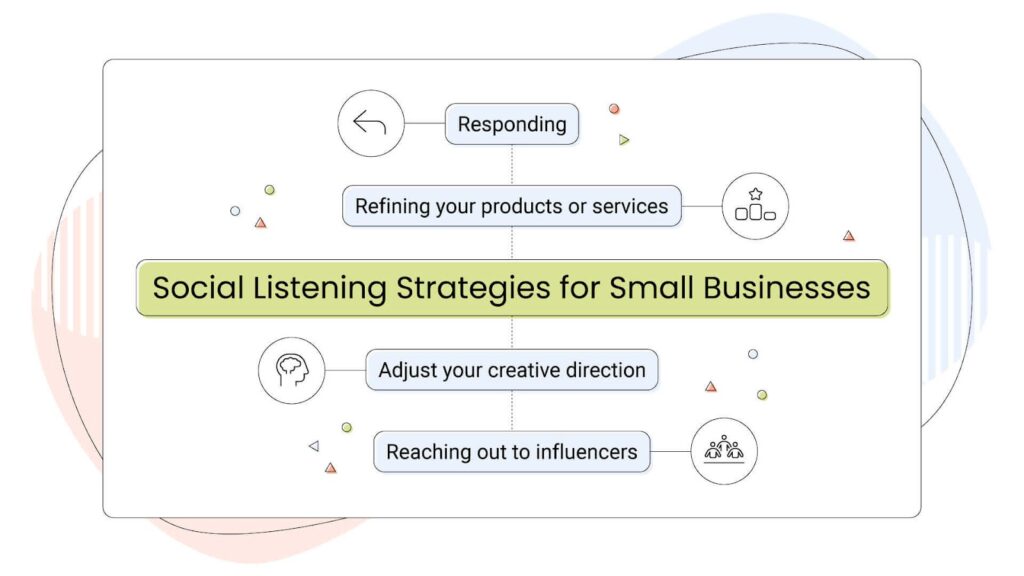
Refining your products or services based on user feedback involves leveraging insights from social listening tools, which are often free. If your company is newly launched, search for relevant products or industry-wide keywords to see what people are saying about companies similar to yours. Identify their strengths and weaknesses, then adjust your marketing strategy accordingly.
Adapt your creative approach. Share an article or product on your Instagram page a few weeks later with a fresh twist—a new title, a different image, and a catchy punchline. Analyze which version performed best, take note of what captured your attention, and use those insights for future posts. This approach aligns with effective social media marketing & management practices, ensuring your content remains relevant and engaging.
Collaborating with influencers can significantly boost your brand’s visibility. Building strong relationships with influencers and staying on top of market trends helps maintain your brand’s relevance. Make sure to reach out to influencers whose style and values align with your business.
Social Listening Tips
To effectively perform social listening, consider these best practices:
- Understand the audience: Identify the buyer personas that are drawn to your brand, products, and services. Learn how to effectively market to your target audience on their preferred platforms.
- Determine what to listen for: With a vast amount of data available, it’s crucial to know exactly what insights your organization wants to extract. This focus helps businesses filter out irrelevant noise from the data.

- Use keywords to find data: Keywords are an effective way to filter social media conversations. These keywords could relate to your company, brands, products, services, or even the broader industry.
- Use a social listening tool: Utilizing a social listening tool can help collect and analyze unstructured social data, providing valuable insights for your business.
- Develop a strategy: Once social data has been analyzed, it’s essential to create a strategy based on the findings. If the social conversation is positive, identify what customers appreciate and build on that. If customers are dissatisfied, explore the issues and consider changes. This could involve adjusting product descriptions, pricing, and features, or adopting new marketing strategies, such as enhancing data-driven content creation.
Social Listening Tools
There are some excellent options available, and keep in mind that the most popular ones are free! If you’re interested in social listening for small businesses, platforms like Facebook, Twitter, Instagram, and Pinterest are fantastic starting points, offering plenty of insight tools for effective social monitoring and listening.

For users looking for more advanced features, there are numerous paid solutions that not only focus on social listening but also help grow your following. Tools like Hootsuite and Brandwatch provide a comprehensive management solution, perfect for those who prefer to have everything in one place.
Common features offered by many paid social listening tools include:
- Audience tools for deeper insights
- Integration with social media platforms
- Connecting with influencers
- Campaign management
Conclusion
Social listening for small businesses is a powerful tool that provides invaluable insights into customer sentiment, industry trends, and competitor strategies. By understanding and engaging with their audience on social media, businesses can refine their products, improve their marketing efforts, and build stronger relationships with their customers. Utilizing both free and paid social listening tools allows small businesses to stay competitive and responsive in an ever-evolving market, ensuring they remain connected to the needs and preferences of their audience.