

The Search Engine Optimization (SEO) industry, like many others in the digital marketing and tech spaces, has long faced issues of gender imbalance. Despite growing awareness of diversity and inclusivity, SEO remains a male-dominated field. Recent data highlights that more than 70% of SEOs are men, and the disparity is not just in numbers—it extends to wage gaps, leadership positions, and opportunities for career growth.
Current Gender Statistics in SEO
Recent data reveals a considerable gender disparity in the SEO industry, with women accounting for only about 30% of the workforce. This gap is more than just a statistic—it points to a systemic issue that impacts innovation, creativity, and diverse perspectives within the field. The importance of varied viewpoints in addressing complex challenges is well-documented, and the lack of female representation can limit progress and reduce the effectiveness of SEO strategies.
Many people wonder why there are still fewer women in digital marketing, even though there’s a growing need for these skills. Issues like societal expectations, workplace culture, and limited access to mentorship often make it hard for women to pursue careers in SEO. This leads to fewer women entering the field, which continues the problem.
It’s important to address this issue for the future of search engine optimization. By creating a welcoming environment and encouraging more women to participate, companies can benefit from fresh ideas and different perspectives. Supporting programs that offer mentorship and networking opportunities for women in SEO is essential.
Historical Context of Gender Roles
Examining the historical context of gender roles reveals how deep-rooted societal norms have influenced women’s participation in fields like SEO. For centuries, traditional views confined women to domestic roles while men dominated professional industries. This division limited women’s opportunities and contributed to a culture that undervalued their contributions, particularly in emerging fields like technology and digital marketing. Notably, many early computer programmers, including those involved in the first space missions, were women, as computing was initially seen as an extension of secretarial work. However, as the profession gained status, it became male-dominated.
The development of the SEO industry has reflected these historical biases. The perception that technical skills are inherently masculine continues to deter women from entering the field. Moreover, the scarcity of female role models in leadership reinforces stereotypes that women are unsuited for such careers. This historical legacy creates a cycle in which women’s participation in SEO remains low, as future generations are influenced by these prevailing narratives.
The Gender Gap in SEO Publishing 2024
Being featured in SEO publications can really boost your career and help you become a thought leader. It allows you to connect with the right people, gain credibility, and build a valuable network, leading to more opportunities.
However, this isn’t just about individual success; it’s about improving the industry as a whole. Changing our biases about who qualifies as an SEO expert is essential to combat discrimination and is also a smart way to strengthen our field. Embracing diverse perspectives has been shown to foster innovation and improve overall standards.
64% of SEO Articles are Written by Men
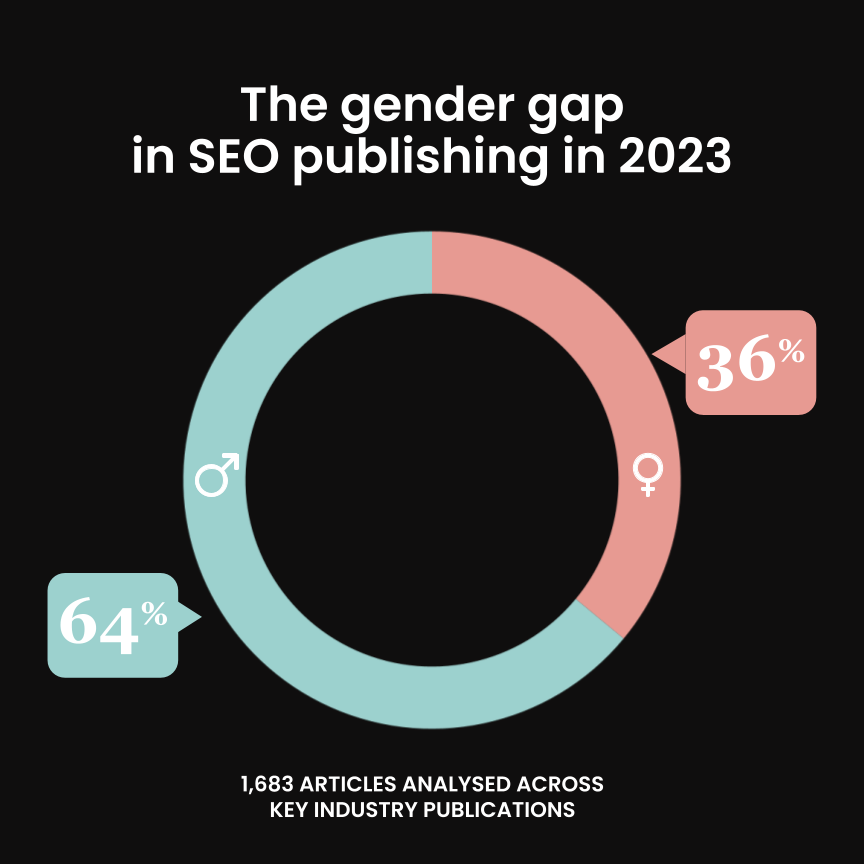
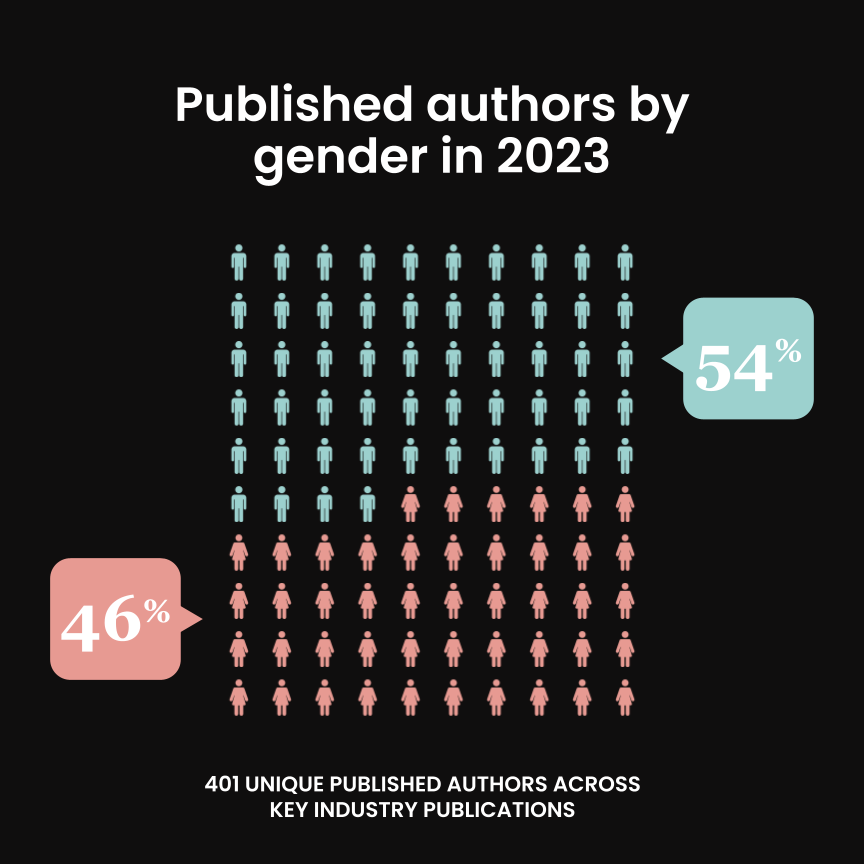
Last year, 64% of articles in SEO publications were authored by men, compared to 36% written by women. It’s encouraging to see an improvement from last year when men wrote 70% of the articles. The number of female writers has also increased: 43% of SEO writers were women last year, and this year it’s risen to 46%. This is a significant increase from just 31% when we first began tracking these numbers!
source:lidia-infante
It may seem obvious, but a larger pool of female writers tends to lead to a more balanced output. Publications with at least 50% of their articles authored by women had an average of 56% female writers in their pool. In contrast, those in the lower half of the dataset only had 34% female authors.
source:lidia-infante
The data clearly indicates that expanding the pool of female writers is crucial for closing the gender gap in SEO publishing.
The Gender Gap by Publication
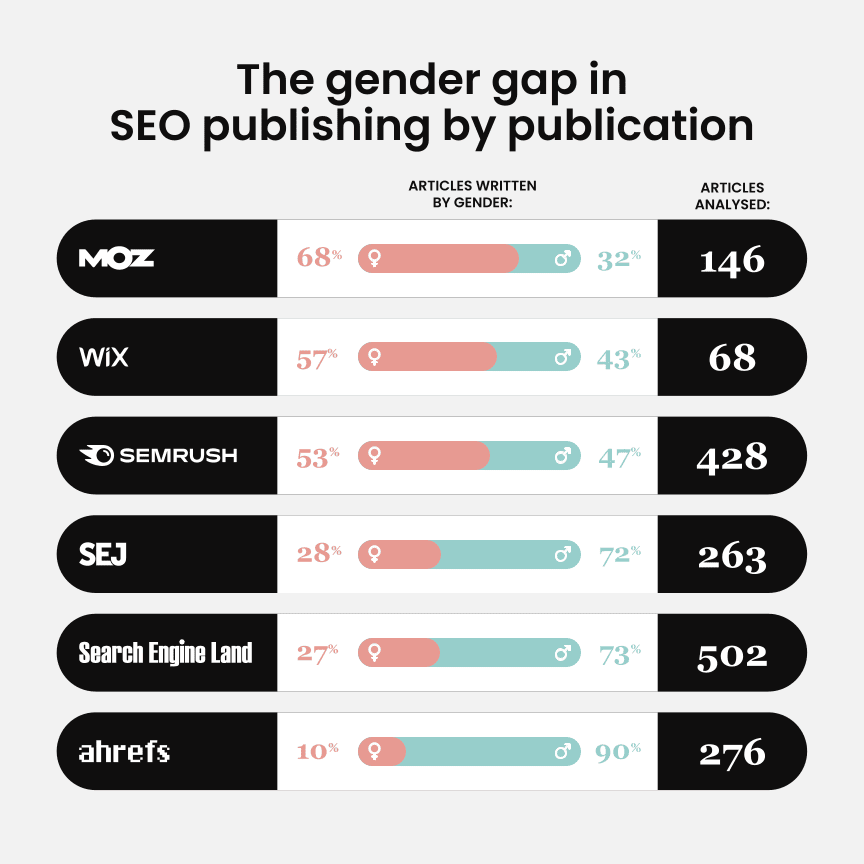
In 2023, the publication with the best representation was Moz, where 68% of articles were written by women. Semrush came closest to a 50/50 split, with 47% of articles authored by men.
For the third consecutive year, Ahrefs ranked lowest, with only 10% of its articles written by women, which is a 2% decline from last year.
It’s important to note that Ahrefs now produces most of its content in-house, making it less fair to compare them with other publications that rely more on guest authors. Ahrefs has the fewest authors of any publication evaluated this year, with only 27, while the industry average is 74.
source:lidia-infante
Some publications have very prolific authors, which can skew the data. For example, Barry Schwartz (SEL), Danny Goodwin (SEL), and Si Quan Ong (Ahrefs) combined wrote 253 articles, accounting for 15% of all articles published in 2023.
Last year, the top three authors contributed 23% of the total content, a much higher percentage than this year, indicating a more diverse author pool.
Here’s what the Moz team had to say:
“On the Moz content team, diversity is at the heart of our work. We strive for gender diversity on our blog and seek to elevate under-represented voices in the industry. The truth is — it’s not hard work. With careful planning and a drive to make the SEO and marketing industry a more inclusive space, you’ll find that the pieces fall easily into place. Collaborations with the Women in Tech SEO community have been fundamental in making this possible.” – Emilie Martin, Learning & Development Specialist, Moz
Is There a Gender Gap in Content Performance?
Last year, articles written by women received 27% less organic traffic on average than those by men. However, in 2023, women improved their performance, outpacing men by 7%.
Conversely, content authored by men garnered 67% more social shares on average and received twice the number of backlinks. It’s important to consider this data carefully, but it does highlight a concerning trend.
The Gender Divide in Writing Topics
There’s a common belief that women tend to write about content while men focus on technical SEO. I aimed to challenge this idea, but the data supports it.
Men wrote 76% of technical SEO articles, whereas women authored 48% of articles related to content SEO and content marketing.
The topics where women have a stronger presence are Local SEO (63%) and Social Media (60%). In contrast, men dominate topics like AI (76%), Technical SEO (74%), and SEO strategy (66%). The topic with the closest gender balance is Career Growth.
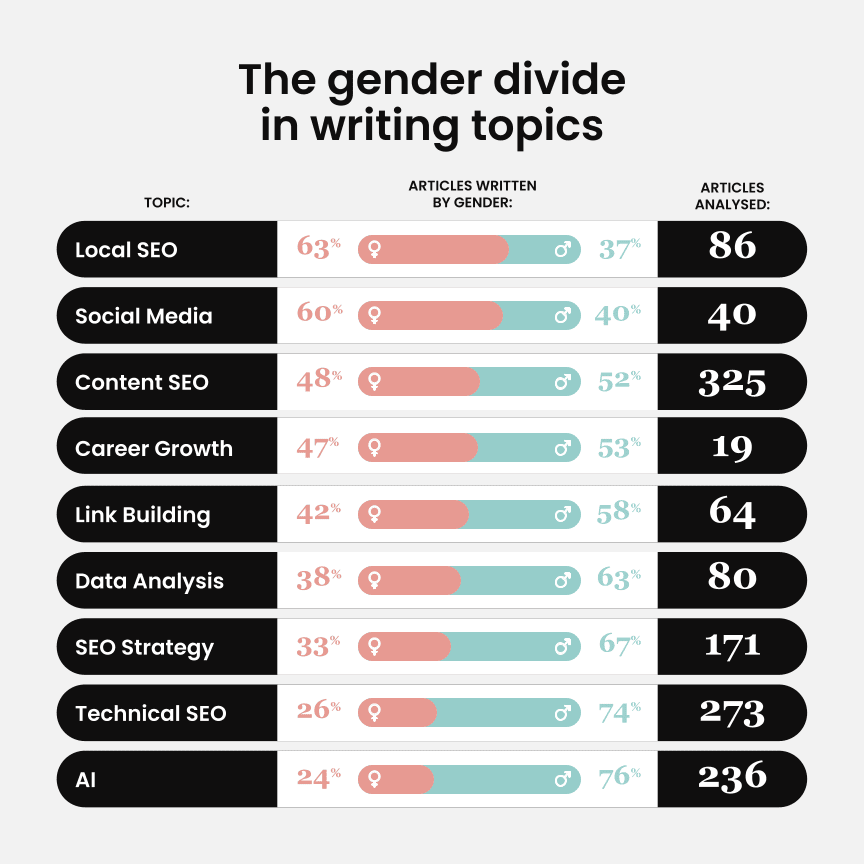
As an industry, our preferred topics in 2023 were Content SEO (24%), Technical SEO (20%), and AI (17%).
Another interesting finding in the data was regarding the specialization of topics, where AI and Local SEO turned out to be the most specialized. The topics with the most author diversity were Data Analysis and Social Media.
As a side note, I previously discovered that 82% of articles on Affiliate Marketing were written by men. Make of that what you will.
Welcoming New Authors
This year, 52% of the authors who wrote for the publications we analyzed were new, having not participated in the 2023 study at all. This is exciting because it indicates that the industry is becoming more welcoming to new writers.
Semrush had the highest percentage of new authors, with 66% of its pool consisting of newcomers, while Ahrefs had the lowest at only 22%. On average, publications featured 45% of new authors.
Notably, 49% of all new authors are female, which brings us closer to bridging the gender gap in SEO publishing.
Barriers Women Face in SEO
Despite some progress, women in SEO still face significant challenges due to both long-standing biases and current industry practices. A major barrier is the persistent stereotype that tech roles are more suitable for men, which can lead to women’s contributions being undervalued and limit their growth opportunities.
The lack of female leaders in SEO also creates a sense of isolation for women entering the field. Without visible role models, it can be discouraging, causing many to doubt their place in the industry.
Workplace culture further complicates things. Women often experience microaggressions or lack access to mentorship, which can impede their career progress. Additionally, the pressure to conform to male-dominated norms can make it harder for women to share their ideas or assert their expertise.
Implicit bias in hiring and promotion also plays a role, resulting in fewer women being recognized for their skills. These barriers not only affect individual careers but also prevent the field from benefiting from the diverse perspectives women bring. Addressing these issues is key to building a more inclusive SEO industry.
Impact of Gender Diversity
Having gender diversity in SEO teams boosts creativity and innovation, leading to better decision-making and improved performance.
When teams bring together diverse viewpoints, they develop more comprehensive strategies and solutions. A varied team is more likely to spot trends and engage effectively with a broader audience.
Research shows that diverse teams outperform their competitors. This isn’t just about equality; it’s about success. Different backgrounds provide insights that can help target specific markets, resulting in higher engagement and better conversion rates. Women in SEO roles contribute to a more balanced understanding of user needs.
Gender diversity also creates a healthier work environment, improving morale and reducing staff turnover. Inclusive teams feel more valued and motivated.
By embracing diversity, you enhance your team’s skills and position your organization as a leader in the industry. It’s a win-win that benefits both the team and the business.
Addressing the gender gap in SEO isn’t just a moral obligation—it’s a smart business move that can boost your bottom line.
Strategies for Increased Inclusivity
How can companies promote inclusivity and reduce the gender gap in SEO?
First, they should implement mentorship programs that connect aspiring women with experienced industry leaders, offering guidance and support.
Second, organizations must focus on diverse hiring practices. Ensuring gender parity in leadership roles within SEO projects and guest post services can foster a more balanced representation in these areas. Equal leadership between men and women in such initiatives helps create a more inclusive environment.
Training on unconscious bias can also help teams recognize and counteract stereotypes that affect hiring and performance evaluations. Creating flexible work environments can support work-life balance, which is especially beneficial for women advancing their careers.
Organizations should also highlight and celebrate female achievements in SEO. By showcasing success stories and ensuring diverse representation, including in leadership roles, companies can inspire the next generation of women in tech.
Conclusion
In SEO, the gender imbalance acts like a cloud that obscures diverse perspectives essential for innovation. By promoting inclusivity and breaking down barriers, we can pave the way for fresh ideas and creativity.
Embracing gender diversity isn’t just the right thing to do—it’s a strategic move that improves decision-making and performance. Let’s not only clear away the clouds but also unlock a vibrant spectrum of talent that drives the industry forward, ensuring a brighter future for everyone.