

One thing that remains constant in the digital marketing world is its rapid pace of change. A prime example of this is the remarkable rise of artificial intelligence (AI) throughout 2023, a trend that continues to shape all aspects of marketing. However, according to Dr. Bin Tang, AI is just one of several challenges marketers are facing.
Marketing also shifts in response to changes in consumer behaviour and the external environment. With global growth projected to be modest and inflation expected to ease, as per the OECD, consumers will likely remain budget-conscious. Moreover, many will favour brands that demonstrate a commitment to societal good, rather than focusing solely on profit.
As we move into 2024, there’s a lot to consider for success, but understanding the digital marketing trends will help you plan, strategize, and stay ahead of the competition.
In this article, we’ll dive into the key digital marketing trends in 2024 that you need to watch out for.
- In social media, we discuss the emergence of Instagram Threads, the importance of treating LinkedIn with seriousness, and the increasing role of AI in social media platforms.
- The application of AI in marketing examines the marketer’s role in shaping strategy, the self-learning capabilities of the technology, the necessity for new skills, and the significance of co-creation.
- SEO trends emphasize the need for marketers to get ready for Google’s AI Overviews, highlighting the importance of creating valuable and shareable content, E-E-A-T (Experience, Expertise, Authoritativeness, Trustworthiness), and enhancing user experience.
- In pay-per-click (PPC) advertising, Google Ads encourages us to view AI as a helpful assistant and to resist pressure from Google representatives to alter campaigns.
- In digital marketing strategy, there is a growing emphasis on the significance of data privacy and sustainability.
Social Media Trends
Social media platforms are continuously vying for consumer attention, necessitating a reevaluation of how success is gauged. A potential shift in dominance may occur as ongoing issues with X (formerly Twitter) create opportunities for emerging platforms like Instagram Threads and Bluesky to gain traction, while others might also find ways to attract organic traffic.
Threads Gaining Popularity
Since its launch in July 2023, Meta’s Threads has reportedly reached 100 million monthly users, and that number is still climbing. As a competitor to X, Threads focuses on sharing text updates and engaging in public discussions.
“I believe Threads has the potential to outperform X significantly. The engagement rates are impressive,” remarks Fishkin. “If your business thrived on X in the past, it’s advisable to pivot that strategy to Threads.”
At the very least, brands should secure a presence on Threads, even if it’s just to claim a username, as user numbers are expected to grow. Research how other brands, like Canva, TedTalks, and Channel 4, are utilizing the platform—this is an ideal time to experiment.
Expert Insight: Rather than directing traffic to a website, prioritize engaging conversations within Threads. Successful brands like Canva and TedTalks focus on asking questions and fostering discussions, which align with users’ current interests.
Retention Rate Outshines Engagement Rate
In recent years, marketers have noticed a decline in organic social media engagement rates due to various factors, such as content quality and timing. As we move into 2024, there may be a shift from engagement metrics to retention metrics.

“Marketers will increasingly focus on retention rates. With attention being a highly valued commodity, users now face a plethora of options,” notes Battisby.
To adapt, brands are creating compelling social media campaigns centred around entertaining, educating, and informing their audiences. The key is to drive engagement through creativity and playfulness.
Battisby also suggests that platforms are testing longer-form video content—like TikTok’s trials with 15-minute uploads—while emphasizing how brands can engage and retain viewers.
Expert Insight: TikTok now offers analytics for Reels, allowing you to monitor audience retention, watch time, and content replay metrics.
LinkedIn’s Organic Reach Thrives
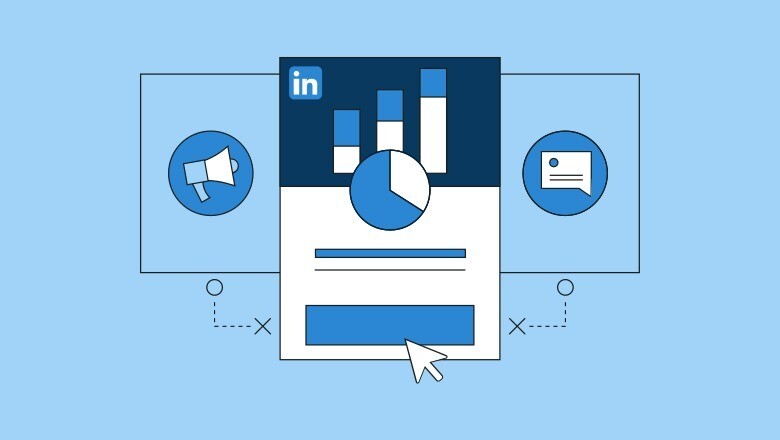
LinkedIn has recently reached a milestone of one billion members globally, evolving from a simple job-hunting site to a powerful business networking platform.
In 2024, organic engagement on LinkedIn is experiencing substantial growth, which is uncommon in today’s social media landscape.
The key to LinkedIn’s success lies in its commitment to its original mission: creating economic opportunities for professionals. Luan Wise, a social media marketing consultant and author, emphasizes the platform’s importance in facilitating business connections.
“LinkedIn has evolved beyond just a place for resumes; it’s now a vital tool for business networking, which is increasingly important for how people discover and collaborate with one another,” notes Wise.
When using LinkedIn for networking, consider your goals for engaging with others on the platform. Reflect on who you want to connect with and how you can add value to one another.
As Wise advises, when posting on LinkedIn, aim for meaningful engagement that benefits your network. While simple congratulatory posts are acceptable at times, those focused on business or career growth deserve deeper interaction.
Expert Insight: Engagement among creators on LinkedIn is booming. Activate ‘Creator Mode’ on your personal profile to enhance your profile and access additional tools. For paid advertising, video ads are currently driving the highest engagement rates on LinkedIn.
AI’s Integration into Social Platforms
It’s no surprise that marketers are leveraging AI to enhance productivity and efficiency. Tools like ChatGPT and Midjourney assist with campaign ideas, copy generation, and text-to-image creation.
Simultaneously, social media platforms are incorporating AI features. For instance:
- TikTok customizes user feeds with AI.
- Instagram is testing AI-generated stickers.
- LinkedIn provides premium users with AI features, including profile writing assistance and ‘Top Choice Jobs.’
- YouTube is exploring Dream Track for Shorts and Music AI tools.
However, utilizing AI comes with risks, such as privacy and ethical concerns. It’s crucial to consider your audience’s perceptions of AI—do they appreciate AI-driven content, or are they resistant to it?
Dr. Bin Tang, Founder & Chairman of Noah Digital, President of the Noah Foundation, and Vice President of the Canada-China Enterprise Overseas Service Centre, explains, “I advocate for the ‘AI partnership’ approach, where human creativity and strategic thinking are the foundation and guiding force, while AI serves as a valuable support tool in the process. AI can significantly enhance research and insights, but we must approach its integration with clear objectives and a focus on audience perceptions. Understanding whether our audiences embrace or resist AI-driven content will be crucial in guiding our marketing strategies moving forward.”
Expert Insight: Check out a guide on some of the most valuable AI tools for social media managers.
AI in Top Digital Marketing Trends 2024
AI continues to dominate discussions in marketing, and its rapid growth will push businesses to adopt new strategies in 2024 to stay competitive. As AI capabilities expand, companies must embrace the technology to navigate the fast-changing landscape.
“49% of NASDAQ’s value and 25% of the U.S. stock market are tied to just six companies, all of which are AI-focused,” says Brian Corish, founder of AI consultancy Elemental Intelligence.
So, what does this mean for marketers?
Marketing Should Take Ownership of AI Strategy
Many marketers are unsure how to fully utilize AI. Since marketing teams are closest to consumer insights, they are best positioned to drive an AI strategy. They can leverage their understanding of customer behaviour to identify how AI can enhance business offerings.
“With AI, it’s crucial to define your objectives first. Don’t let tactics dictate strategy. Instead, let strategy guide tactics,” says Jim Lecinski, Clinical Associate Professor of Marketing at Northwestern University. Successful AI adoption requires an AI marketing champion to lead the charge; without one, progress stalls.
Corish emphasizes the importance of assessing your company’s structure, appetite for change, and potential resistance. This will allow you to strategically identify and prioritize AI projects, securing stakeholder buy-in.
When selecting an AI initiative, marketers should choose between optimizing processes, speeding up production, or transforming their business model:
- Optimize: Improve efficiency in internal workflows (e.g., using ChatGPT to draft marketing briefs).
- Accelerate: Enhance existing products or services with AI to boost customer value and justify premium pricing.

- Transform: Explore using AI to develop entirely new products, services, or business models by addressing organizational pain points.
Expert Tip: Ensure your company’s internal processes are optimized before considering large-scale transformations. For instance, if 80% of tasks are browser-based, automation could significantly improve efficiency.
Marketers Should Focus on Skill Development & Co-Creation
While AI excels at technical tasks, it struggles with soft skills. As Corish puts it, “AI is the worst it will ever be right now.” Marketers must therefore refine their interpersonal and reasoning skills to navigate organizational challenges effectively.
In the coming years, co-creating with AI will be essential. AI won’t replace your job, but someone who knows AI will. The future lies in collaboration between humans and AI to enhance marketing efforts.
SEO Trends in 2024
The landscape of SEO is evolving, with 2024 expected to bring significant changes that focus on user intent and technology. AI and machine learning are set to play a key role in helping search engines better understand user needs.
Google’s Search Generative Experience (SGE) Will Advance
Google’s SGE, now called AI Overviews (AIO), is reshaping how users interact with search results by offering generative AI-powered responses. The aim is to deliver more relevant, detailed information based on user questions, with AIO also providing follow-up question options for a conversational experience.
According to SEO expert Nikki Lam, AIO’s impact on traffic could be significant. “We anticipate a potential decline in clickthrough rates for websites below the AI snapshot, which is concerning for SEO professionals,” she notes.
Expert tip: Closely monitor when your website appears in an AI snapshot. As the AIO rollout continues, using data to understand your performance will be vital.
Create Content That Stands Out
In 2024, high-quality content will be even more critical. “Your success will depend on creating content that is far superior to AI-generated content,” Lam advises. Although there have been rumours that backlinks may no longer be as important, they are still considered a signal of authority, especially when corroborating AI snapshots.
Expert tip: Google is increasingly surfacing videos and high-quality images in the AIO carousel. As the technology improves, integrating playable videos into your content strategy will be essential.
Prioritize E-E-A-T Content
Google’s E-E-A-T (Experience, Expertise, Authoritativeness, and Trustworthiness) framework, while not a direct ranking factor, is a crucial part of the Search Quality Evaluator Guidelines. The recent addition of the extra “E” for Experience underscores the importance of genuine, real-world knowledge—something AI cannot replicate. Human content marketers have the advantage of being able to deliver this firsthand experience.
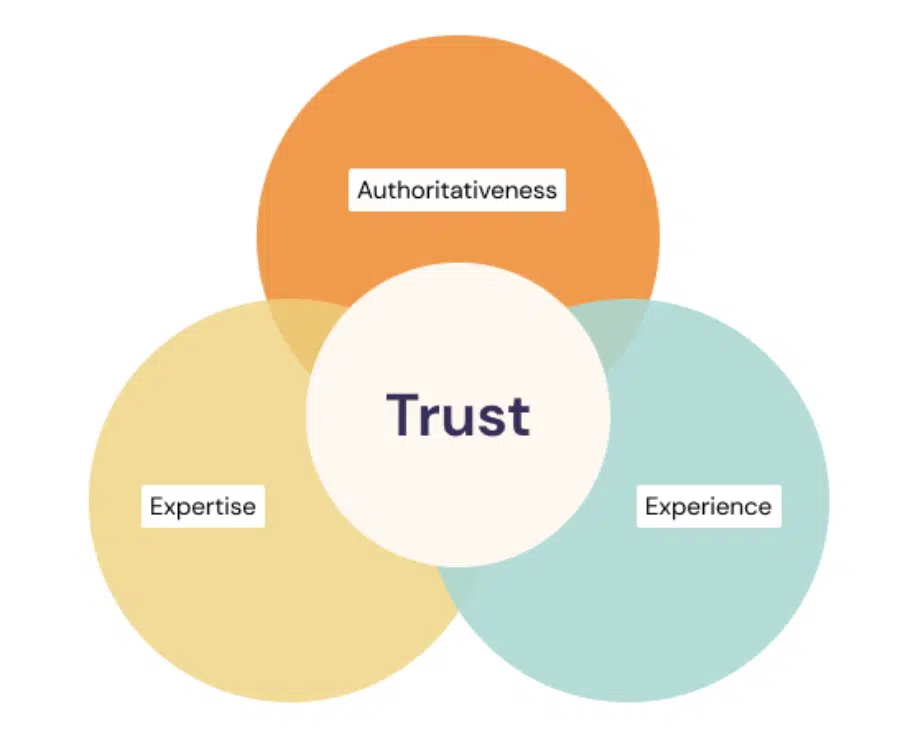
Lam suggests, “As you build your content strategy, focus on proving your expertise, authority, and experience to ensure your content is trusted by both users and Google.“
Expert tip: Develop a checklist of E-E-A-T signals relevant to your business. Compare your efforts against your competitors and find ways to improve your trustworthiness and authority.
Focus on Conversion Rate & User Experience (UX)
While SEO professionals cannot control changes in search engine results pages (SERPs), they can focus on improving user experience (UX) on their websites. Fast page speeds and seamless UX will become even more crucial to converting visitors.
“You can’t afford slow page speeds or poor UX,” Lam stresses. “Even small improvements can make a significant difference.” For instance, Mozilla increased Firefox conversions by 14% by shaving just a second or two off its load times.
Expert tip: Regularly optimize your UX and page speed to ensure that every user visiting your site has the best possible experience, ultimately boosting your conversions.
PPC Trends in Online Marketing Trends 2024
In an increasingly competitive landscape, paid advertising remains a powerful tool for targeting core audiences with precision. The pay-per-click (PPC) model is particularly attractive as it allows marketers to control their budgets and spending effectively.
“One of the main challenges for those running PPC campaigns right now is keeping cost per click down,” says Brendan Almack, Managing Director of Wolfgang Digital. He also highlights a shift in the importance of ROAS (Return on Ad Spend), with marketers realizing that focusing solely on ROAS might hinder growth, especially when it comes to acquiring new customers.

Google continues to dominate this space, with its advertising revenue reaching $59.6 billion in Q3 2023, a 9.5% increase from the previous year. This demonstrates the continued demand for paid ads, and this trend will likely carry forward into 2024.
AI as an ‘Assistant’ in Google Ads
In 2024, Google will introduce more generative AI tools into Google Ads. While these tools can enhance ad performance, marketers should remain cautious as Google Ads is ultimately a revenue-generating platform for the company. AI-driven ad layouts and algorithms may create biases that impact ad visibility and performance.
Cathal Melinn, Digital Marketing Director and E-commerce specialist, notes, “Google has been shifting more control away from search marketers and handing it over to AI.” This includes AI-driven campaigns like Demand Generation and Performance Max, which connect display ads to search. However, AI’s limitations, such as its inability to fully understand context and language like humans, can result in over-optimization.
Expert tip: Use AI as a strategic assistant, not a replacement. The Google Ads interface offers an optimization score, suggesting actions like enabling the display network or turning on broad match. Be aware that Google Ads may nudge you toward actions that benefit its system, not necessarily your campaign. Ensure any changes you make are truly in your best interest.
Avoid On-the-Spot Pressure
Google often pressures PPC managers with aggressive recommendations through phone consultations. However, it’s crucial not to make hasty decisions. Melinn advises, “Never make changes to your campaigns while on the phone with a Google rep. Take time to assess whether their suggestions align with your strategy.”
Expert tip: Amy Hebdon, founder and Managing Director of Google Partner agency Paid Search Magic, offers valuable insights in her article, ‘Are you being manipulated by Google Ads?’—a must-read for anyone managing PPC campaigns in 2024.
As AI continues to influence paid advertising, marketers must balance automation with their own judgment. The key takeaway for online marketing trends in 2024 is to embrace AI as a tool for optimization, but always rely on data-backed decisions for sustained growth.
Source:digitalmarketinginstitute
Digital Marketing Strategy Trends in 2024
As the new year begins, it’s the perfect opportunity to reassess your digital marketing strategy. Understanding what worked and, more crucially, what didn’t will help guide your business goals, whether it’s growth or increasing brand awareness. A strong strategy also aligns your team, ensuring everyone knows where to focus their efforts and what they are aiming to achieve.
In 2024, having a clear AI strategy will be essential. According to Mesh-AI research, only 15% of organizations currently have a well-defined AI strategy, highlighting a major area for improvement. But what other priorities should be on your radar?
Data Privacy Remains a Critical Issue
Data privacy continues to be a growing concern for both consumers and businesses. Breaches and data misuse don’t just result in financial losses—they erode customer trust, leading to reduced engagement and data capture. Research from KPMG shows that 86% of Americans are increasingly concerned about data privacy, while 68% worry about how much data businesses are collecting.
Expert tip: Be transparent about your data usage, give customers control over their information, and make sure the value exchange for their data is clear. Stay updated on data privacy regulations to avoid costly mistakes.
Managing Customer Expectations on Sustainability
Sustainability has become a key factor in purchasing decisions. According to PWC’s Global Consumer Insights Pulse Survey, over 70% of customers are willing to pay more for sustainably produced products. This shift reflects how consumers are using their spending power to align with their social values. For businesses, this presents an opportunity to leverage pricing power for products and services that meet sustainability expectations.
Fitzpatrick notes, “Sustainability is becoming increasingly important in people’s decision-making. Customers don’t want to support companies that harm the environment, no matter how much they like their product.”
Expert tip: Audit the sustainability of your product or service lifecycle. Identify areas for improvement and engage with your customers to understand their sustainability concerns. This is also a good time to revisit your corporate social responsibility strategy.
As part of digital marketing trends 2024, businesses must prioritize transparency in data practices and sustainability to maintain consumer trust and competitiveness. Combining these elements with a cohesive AI strategy will help brands thrive in the evolving digital landscape.
Conclusion
The digital marketing landscape in 2024 is poised to be shaped by rapid advancements in AI, changing consumer behaviours, and heightened expectations around data privacy and sustainability. To stay competitive, businesses must embrace AI strategically while ensuring transparency in their data practices and addressing sustainability concerns. By adapting to these evolving trends, marketers can not only meet consumer expectations but also position their brands for long-term success in an increasingly dynamic environment.